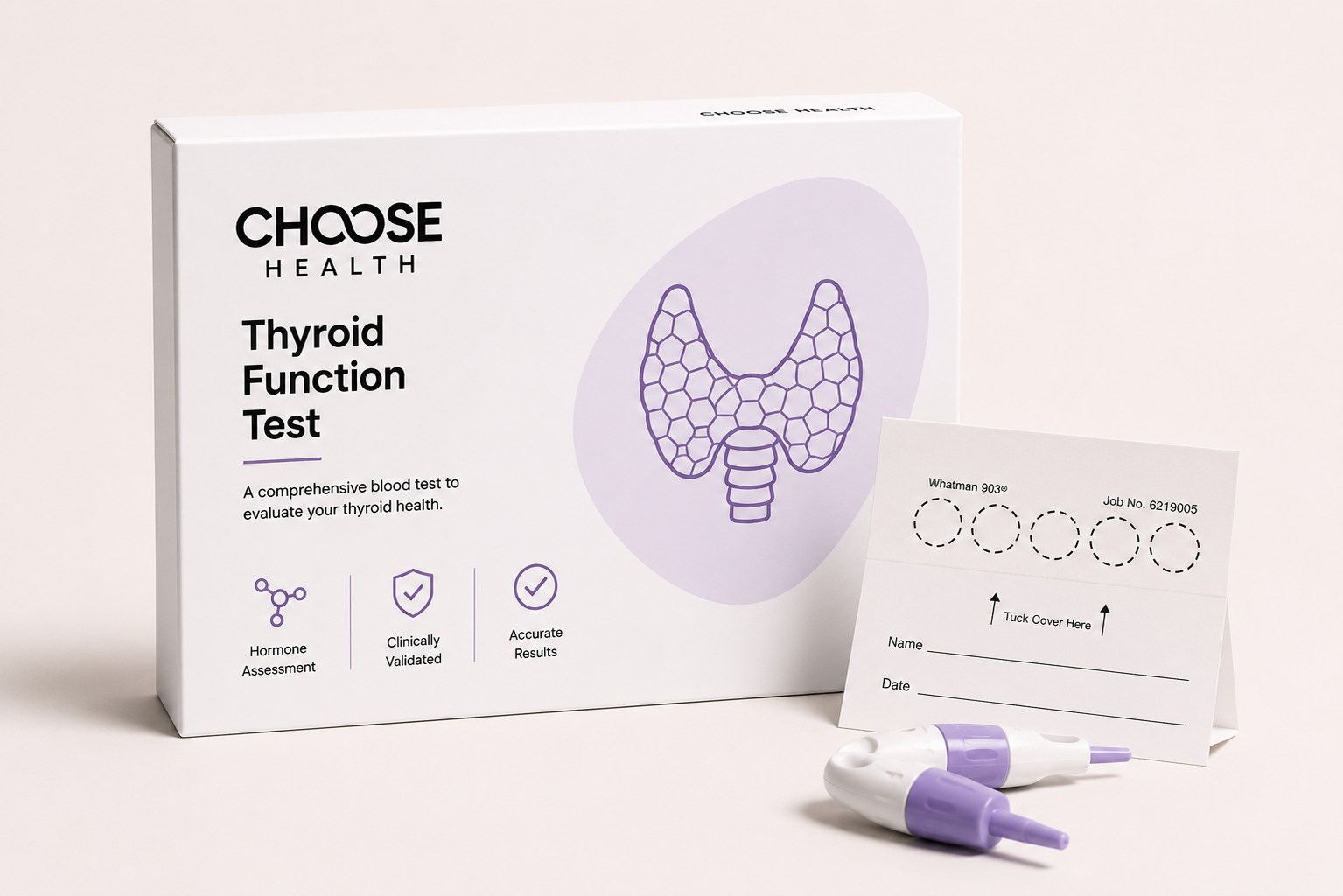
NVDM athlete collection · 4 biomarkers
Thyroid Panel
When fatigue deserves a closer look.
4 biomarkers · Finger-prick collection.
NVDM pricing shown. Review the final total at checkout.
Your starting point
Who is this for?
For athletes with persistent fatigue, cold intolerance, unexplained weight changes or a prior thyroid result that needs follow-up.
The endurance connection
Why it matters.
TSH and Free T4 help investigate thyroid function. Free T3 can add context when energy availability is low. TPO Antibodies help assess an autoimmune contribution.
IOC: energy availability and athlete health ↗Know what you’re measuring
Every marker, explained.
TSH, Free T3, Free T4, TPO Antibodies.
Counts follow the store. Profiles and calculated estimates are labeled separately from individual blood measurements.
| Marker | What it can tell you | Why it matters for an athlete |
|---|---|---|
| TSHThyroid | The pituitary signal directing thyroid hormone production. | Useful when fatigue comes with cold intolerance, unexplained weight changes or altered heart rate. Read with thyroid hormones. American Thyroid Association: thyroid tests ↗ |
| Free T3Thyroid | The unbound active thyroid hormone. | May fall with prolonged low energy availability. A low value needs interpretation alongside symptoms and fueling. IOC: energy availability and athlete health ↗ |
| Free T4Thyroid | The unbound form of the main hormone released by the thyroid. | Together with TSH, helps investigate thyroid dysfunction that can affect energy and exercise tolerance. American Thyroid Association: thyroid tests ↗ |
| TPO AntibodiesThyroid | Antibodies associated with autoimmune thyroid disease. | Helps investigate why thyroid function may be changing. Repeated antibody levels usually do not guide training decisions. American Thyroid Association: thyroid tests ↗ |
Baseline · Build · Follow-up
Make testing part of your season.
This is a planning framework for a 12–16-week build. Your results and symptoms determine whether you need an earlier check.
01
Before the build
Collect during a recovered, representative week before increasing training. This gives you a comparison point.
02
During a 12–16-week build
If symptoms develop or previous results were borderline, arrange a targeted check with enough time to act before race week.
03
Between training blocks
Review the trend after recovery. Repeat the markers that answer your next question; a full panel is not automatically needed each time.
How often should you retest?
- ThyroidUse symptoms and previous results to set follow-up. TSH commonly takes about 6–8 weeks to reassess after a thyroid medication dose change. This is not a universal lifestyle-retest schedule; TPO antibodies usually do not need serial monitoring. American Thyroid Association: thyroid tests ↗
New or persistent symptoms deserve assessment between scheduled tests. There is no universal quarterly requirement for every marker.
A result worth comparing
Before you collect.
- Follow your kit instructionsUse the collection and fasting instructions supplied with your kit. Drink water normally; do not arrive dehydrated or deliberately overhydrate.
- Record your contextNote collection time, recent training, illness, sleep, medications and supplements. Do not stop prescribed medication without advice.
- Choose a representative dayFor a resting comparison, avoid collecting immediately after a race, hard workout, overnight travel or while acutely ill. Wait until sleep and hydration are back to your usual pattern.
- Check biotin supplementsBiotin can interfere with thyroid assays. Ask the lab how long to pause your particular dose before collection; do not assume every supplement needs the same hold.
Turn results into a next step.
Bring your results together with training load, fueling, symptoms and any supplements. Choose one clear action with your clinician or sports dietitian, then agree which markers to repeat and when.
Persistent fatigue, missing periods, recurrent bone stress injuries or unexpectedly abnormal results need clinical follow-up. A normal panel does not rule out RED-S or explain every change in performance.
Evidence and further reading
These sources explain the biomarkers and testing context. They do not validate these specific kits as a diagnosis of RED-S or a guarantee of improved performance.