



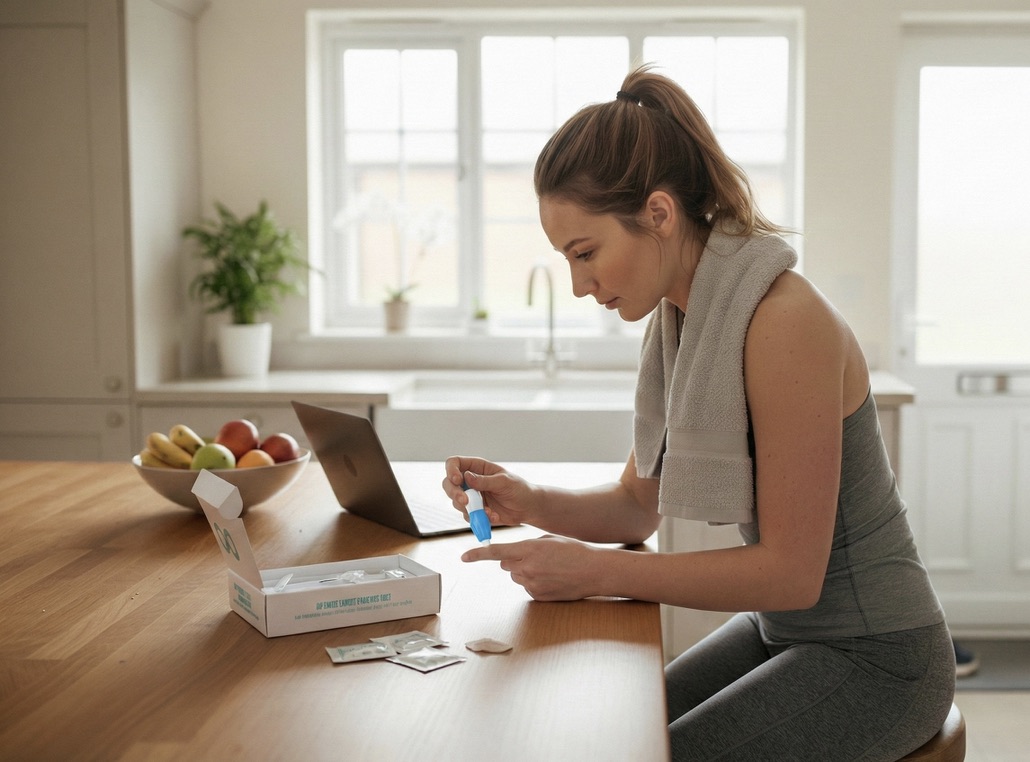
Your hormones regulate your menstrual cycle, mood, metabolism, fertility, sleep, and energy levels. When hormones shift out of alignment, women can experience irregularity with menstruation/periods, a hard time conceiving, variance in weight, feeling “always tired”, or general moodiness without rhyme or reason.
What You'll Learn:
- Which hormones are measured in a female hormone panel
- When to test during your cycle for accurate results
- What causes hormone imbalance
- How at-home hormone testing works
What Is Female Hormone Testing?
Female hormone testing measures hormones that regulate your reproductive system through a blood sample. A standard panel measures estradiol, progesterone, testosterone, follicle-stimulating hormone (FSH), and luteinizing hormone (LH).
Hormone tests can be indicators of conditions like polycystic ovary syndrome (PployCOS), irregular ovulation, fertility issues, and symptomatic hormone imbalances. Testing at the right time in your cycle shows how your hormones function.
Patterns matter more than single test results. Many women test multiple times or track changes over several months.
The Core Hormones in a Female Hormone Panel
Estradiol (E2)
Estradiol is the primary estrogen during reproductive years. Your ovaries produce it. It rises during the first half of your cycle to thicken the uterine lining and prepare for ovulation.
Low estradiol causes irregular periods, missed periods, hot flashes, vaginal dryness, and difficulty getting pregnant. High estradiol may indicate estrogen dominance. This causes heavy periods, breast tenderness, weight gain, and mood swings.
Progesterone
Progesterone is produced after ovulation. It prepares the uterus for pregnancy and rises during the second half of your cycle.
Low progesterone causes short cycles, spotting before your period, difficulty maintaining early pregnancy, and PMS symptoms. Testing progesterone confirms whether you've ovulated.
Testosterone
Although testosterone is often thought of as a “male” hormone, women need it too — just in much smaller amounts. It plays a role in sex drive, energy levels, muscle strength, and even how motivated you feel day to day.
When testosterone is too low, you might notice low energy, a drop in libido, or feeling more down than usual. On the other end, higher-than-normal testosterone in women is commonly associated with PCOS and can show up as acne, increased facial or body hair, irregular cycles, or thinning hair on the scalp.
FSH and LH
FSH and LH are hormones made by the pituitary gland in your brain, and they act as messengers between your brain and ovaries.
FSH helps stimulate the growth of ovarian follicles at the start of each cycle, while LH is responsible for triggering ovulation when it rises mid-cycle. Looking at these two hormones together can reveal how well your brain and ovaries are working as a team.
- High FSH can indicate diminished ovarian reserve, especially approaching perimenopause.
- High LH relative to FSH is common in PCOS.
Hormones Often Included in Comprehensive Testing
While core reproductive hormones explain cycle timing and ovulation, they don’t tell the full story for everyone. Some hormone imbalances are driven by stress, adrenal function, or nutrient status, which is why more comprehensive panels include additional markers.
Cortisol
Cortisol is often called the “stress hormone,” but its job goes far beyond stress alone. It helps regulate energy, blood sugar, immune function, and your sleep–wake cycle. When cortisol is consistently too high or too low, it can interfere with ovulation, increase fatigue and anxiety, and make weight gain harder to manage. Testing cortisol can be especially helpful when symptoms persist during long periods of stress, burnout, or poor sleep.
DHEA-S
DHEA-S is made by the adrenal glands and serves as a building block for both estrogen and testosterone. Levels naturally decline with age, but when they’re too high or too low, you may notice changes in energy, mood, libido, or how well you handle stress. Irregular DHEA-S levels can also be linked to PCOS, adrenal imbalances, or unexplained fatigue.
Vitamin D
Although it’s labeled a vitamin, vitamin D in practice really functions more like a hormone in the body. It plays a role in immune health, bone strength, insulin sensitivity, and hormone signaling. Low vitamin D is very common and has been associated with menstrual irregularities, fertility challenges, and mood changes. Including it in hormone testing adds valuable context to your overall hormonal picture.
Thyroid-Stimulating Hormone (TSH)
TSH shows how your brain and thyroid communicate with each other. Because thyroid hormones influence metabolism, energy, ovulation, and menstrual regularity, even subtle thyroid imbalances can cause symptoms that look a lot like reproductive hormone issues. Measuring TSH helps fill in important gaps when evaluating hormone-related symptoms.
Taken together, these markers help explain symptoms that don’t show up clearly on reproductive hormones alone and offer a more complete view of how stress, metabolism, and nutrient status interact with your hormone health.
When Should You Test Female Hormones?
For most people, doctors and labs often suggest testing around day three of the menstrual cycle. This timing isn’t about hitting a perfect date, but about getting results that are easier to interpret. If you’re testing more than once to track changes over time, staying consistent becomes just as important as the exact day. Testing on the same cycle day each time helps you see real trends, rather than normal ups and downs that happen throughout the month.
Why day three is commonly recommended - Early in your cycle, hormone levels tend to be at their baseline. Testing around day three gives a clearer look at hormones like estradiol, FSH, and LH before they begin rising later in the cycle. Day one is counted as the first day of full menstrual bleeding, not light spotting.
If day three isn’t realistic, testing on day two or day four usually still provides useful insight. This window makes it easier to assess how your ovaries are responding and can help highlight patterns seen in conditions like PCOS or changes in ovarian reserve.
Morning testing for testosterone - Testosterone follows a daily rhythm and tends to be highest in the morning. For the most accurate results, testing between 7 and 10 AM is ideal. While testosterone can be measured at any point in your cycle, testing earlier in the day helps reduce variability.
If your cycles are irregular - If your cycle is shorter than 21 days, longer than 35 days, or unpredictable, it’s a good idea to start by talking with your primary care provider. When using an at-home test, tracking ovulation with a predictor kit can help guide timing. Testing about five to seven days after a positive ovulation result can provide clearer insight into how your hormones are functioning.
If you’re on hormonal birth control – Hormonal birth control prevents ovulation and suppresses your body’s natural hormone production, which can make cycle-based testing less helpful. If you’re using the pill, patch, ring, or a hormonal IUD, talk with your provider about whether hormone testing makes sense for you.
Common Reasons to Test Your Hormones
You should test if you experience:
How At-Home Hormone Testing Works
At-home testing gives you the same results as traditional blood draws. You test on your schedule and control the timing.
With Choose Health:
- Order your test kit online
- Collect a finger-prick blood sample at home on the right day of your cycle
- Mail your sample to a CLIA-certified lab using the prepaid envelope
- Get results in 3-5 days through your secure dashboard
- Track hormone levels over time and compare results across tests
You can test on day 3 or day 19-22 without scheduling appointments. Many women find this useful when timing matters for their cycle or when tracking hormone changes across several months.
The lab analysis is identical to traditional blood draws. The difference is convenience and testing when it matters for your cycle.
Choosing the Right Hormone Panel for Your Goals
Different hormone panels answer different questions. Some people test because something feels off, while others test proactively to better understand their baseline and track changes over time. The right panel depends on what information you want and how much context you need.
The Female Hormone Test focuses on core reproductive and thyroid markers: estradiol, progesterone, FSH, LH, and TSH, along with visceral fat for metabolic context. This panel is useful if you want a clear picture of how your reproductive hormones and thyroid are functioning together. Many people choose this option to understand cycle patterns, ovulation, fertility, or to establish a baseline before symptoms appear.
The Comprehensive Female Hormone Test includes additional hormones such as testosterone, cortisol, DHEA-S, and Vitamin D. This panel provides a broader view of hormone regulation beyond the menstrual cycle. It’s often chosen by people who want deeper insight into stress response, energy levels, recovery, mood, and overall hormone balance, or who are tracking changes over time during life stages like high stress, postpartum, or perimenopause.
Both panels use the same at-home blood testing process and are analyzed by CLIA-certified labs. The difference is scope. One focuses on reproductive and thyroid hormones, while the other adds stress, adrenal, and nutrient context for a more complete picture of hormone health.

Understanding Your Results
Hormone results require context. A single number doesn't tell the whole story.
Age and life stage matter - Normal ranges shift as you age. FSH levels normal for a 25-year-old would be low for a 45-year-old approaching menopause. Estradiol levels change dramatically from reproductive years through perimenopause to postmenopause.
Cycle day matters - Estradiol that's low on day 3 is normal. The same level on day 12 indicates a problem with follicle development. Always note which cycle day you tested.
Patterns over time matter most - One test is a snapshot. Testing multiple times shows whether your hormones are stable, trending in a direction, or responding to lifestyle changes. This is why tracking metabolic markers like insulin resistance alongside hormones reveals important connections.
Symptoms matter - Lab ranges represent 95% of the population. You might feel best at the higher or lower end of normal. If your results are normal but symptoms persist, discuss this with your healthcare provider.
FAQ
Can you test female hormones at home?
Yes. At-home hormone tests use a finger-prick blood sample that’s analyzed by CLIA-certified labs, the same type of labs used for traditional blood draws. The main difference is convenience and the ability to test on specific days of your cycle when timing matters most.
What is the best day to test female hormones?
For most people, testing around day three of the menstrual cycle provides the clearest picture of baseline reproductive hormones like estradiol, FSH, and LH. Day one is the first day of full menstrual bleeding, not spotting. If day three isn’t possible, days two through four are usually acceptable.
Can you test hormones if your cycle is irregular?
Yes, but timing may require more planning. If your cycles are irregular, tracking ovulation with a predictor kit can help guide when to test. In some cases, your healthcare provider may recommend testing based on symptoms rather than cycle day.
Do you need symptoms to test your hormones?
No. Many people test proactively to establish a baseline or track changes over time, even if they feel well. This can be especially helpful during life stages like high stress, postpartum, or perimenopause, or if you have a family history of hormone-related conditions.
How often should you test female hormones?
It depends on your goals. One test provides a snapshot, while repeat testing over several months can show trends and changes. If you’re tracking symptoms or lifestyle changes, testing on the same cycle day each time helps keep results comparable.
What should you do if your hormone results are abnormal?
Hormone results should always be interpreted alongside symptoms, age, and cycle timing. If results fall outside the expected range or don’t align with how you feel, it’s best to review them with a healthcare provider who can help determine next steps.
Take Control of Your Hormone Health
Female hormone testing gives you information about what's happening in your body. Whether you're trying to conceive, managing symptoms, or tracking changes during perimenopause, knowing your hormone levels helps you make informed decisions.
If you’re curious about your hormone patterns and want to track changes over time, at-home testing makes it easy to get results when it works for you.
.png)