



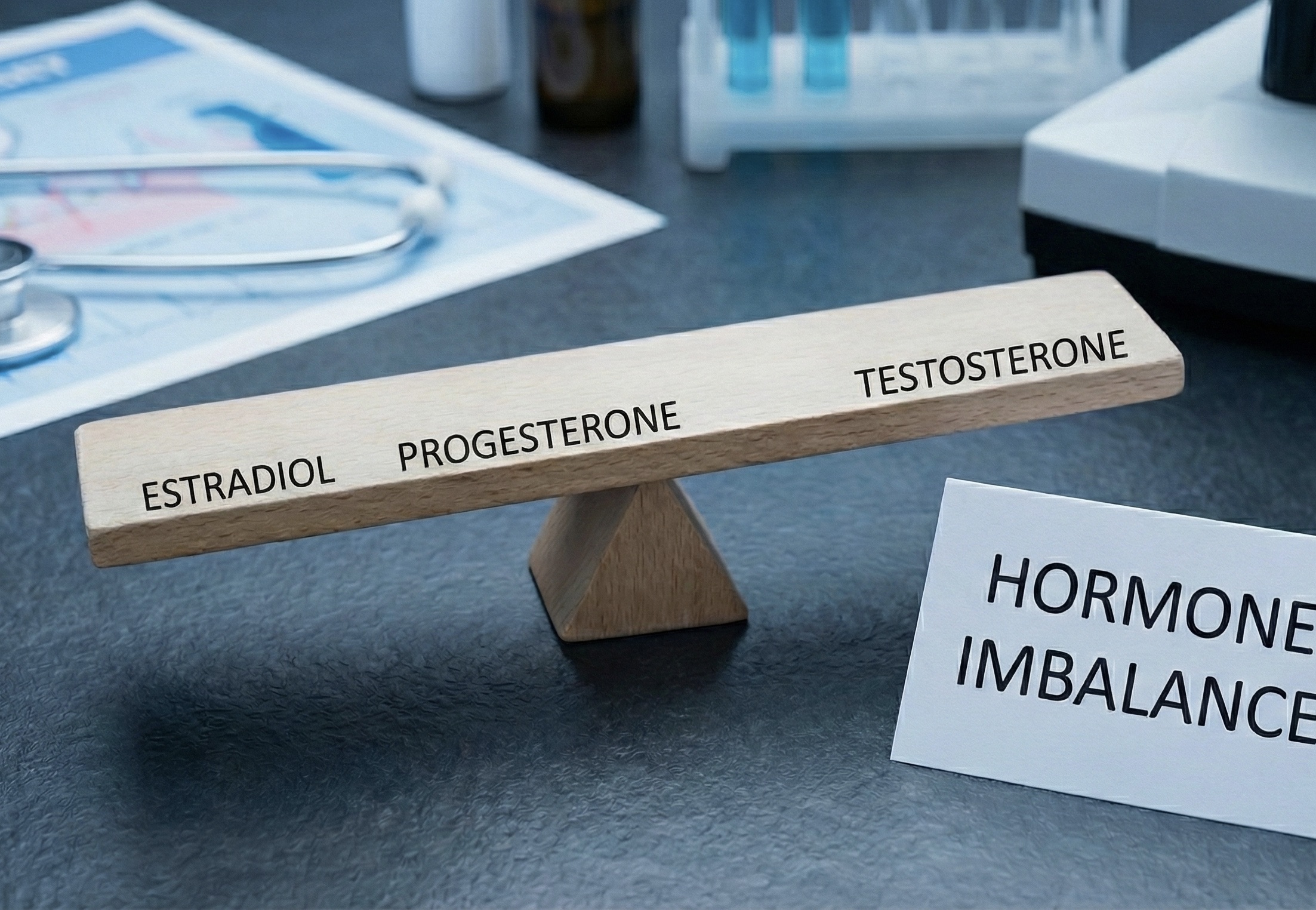
The effect hormones have on the female body is wide and varies depending on which female hormone you zoom in on.
Here, we’ll help simplify how hormones work within the body, what can bring imbalances about, and the most frequently seen hormone imbalances today.

How Hormones Work
Think of hormones like texts, but the messages they send are chemicals produced by glands within the body. By traveling through the blood, your hormones give your organs instructions on what to do.
The human body creates over 50 types of hormones. For women, the most relevant hormones typically are estrogen, progesterone, testosterone, thyroid hormones, cortisol, and insulin.
Hormones work in feedback loops, adjusting based on signals from your brain and other glands. When one hormone shifts, others often shift in response.
What Causes Hormones to Become Imbalanced
A hormone imbalance occurs when you have too much or too little of one or more hormones. Several factors can cause this:
Overproduction or underproduction. The glands that make hormones can become overactive or underactive due to stress, illness, autoimmune conditions, or aging.
Poor hormone clearance. Your liver metabolizes hormones for elimination. If liver function is sluggish, hormones can build up. Your gut also plays a role. Imbalanced gut bacteria can increase an enzyme called beta-glucuronidase, which allows estrogen to be reabsorbed instead of eliminated.
Xenoestrogens. These synthetic chemicals mimic estrogen in your body. They're found in plastics, pesticides, personal care products, and food packaging.
Chronic stress. When you're stressed, your body prioritizes cortisol production. According to the VA Whole Health Library, cortisol is made from precursors that include progesterone. High stress can deplete progesterone, disrupting the estrogen-progesterone balance.
Body fat. Fat tissue produces estrogen. Higher body fat percentage can lead to higher estrogen levels.
Common Types of Hormone Imbalances in Women
Estrogen dominance. This means estrogen is high relative to progesterone. It can happen when estrogen is elevated, progesterone is low, or both. According to Cleveland Clinic, estrogen dominance can cause heavy periods, breast tenderness, weight gain, and mood changes.
Low progesterone. Progesterone rises after ovulation. If you're not ovulating regularly, progesterone stays low. This causes irregular periods, anxiety, sleep problems, and spotting. Supporting healthy progesterone levels often starts with supporting regular ovulation.
High androgens. Elevated testosterone and DHEA cause acne, excess facial or body hair, and irregular periods. This pattern is common in PCOS, which affects 8-13% of women of reproductive age.
Thyroid imbalances. Hypothyroidism (low thyroid) causes fatigue, weight gain, and feeling cold. Hyperthyroidism (high thyroid) causes anxiety, weight loss, and rapid heartbeat. Thyroid function also affects other hormones. Low thyroid can contribute to low progesterone.
High cortisol. Chronic stress keeps cortisol elevated. High cortisol disrupts sleep, increases abdominal fat, and suppresses progesterone production. Managing cortisol and DHEA-S matters for overall hormone balance.
How to Know If You Have a Hormone Imbalance
Symptoms can point you in a direction, but female hormone testing can fully uncover the root cause.
Common signs include irregular periods, fatigue, mood changes, sleep problems, weight changes, acne, and low sex drive. For a complete breakdown of which hormones cause which symptoms, see our guide on hormone imbalance symptoms in women.
A hormone panel can measure estrogen, progesterone, testosterone, thyroid hormones, and other markers. Timing matters because levels change throughout your cycle. Days 2-4 is standard for most hormones. Day 21 is when progesterone should be tested.
Choose Health's at-home female hormone tests let you collect a finger-prick blood sample and mail it to a CLIA-certified lab. Results arrive within a few days.

Start With Testing
You don't need to guess whether your hormones are balanced. You can measure them.
Once you know which hormones are off, you can work with a healthcare provider to address the root cause, whether that's stress, gut health, thyroid function, or something else.
.png)