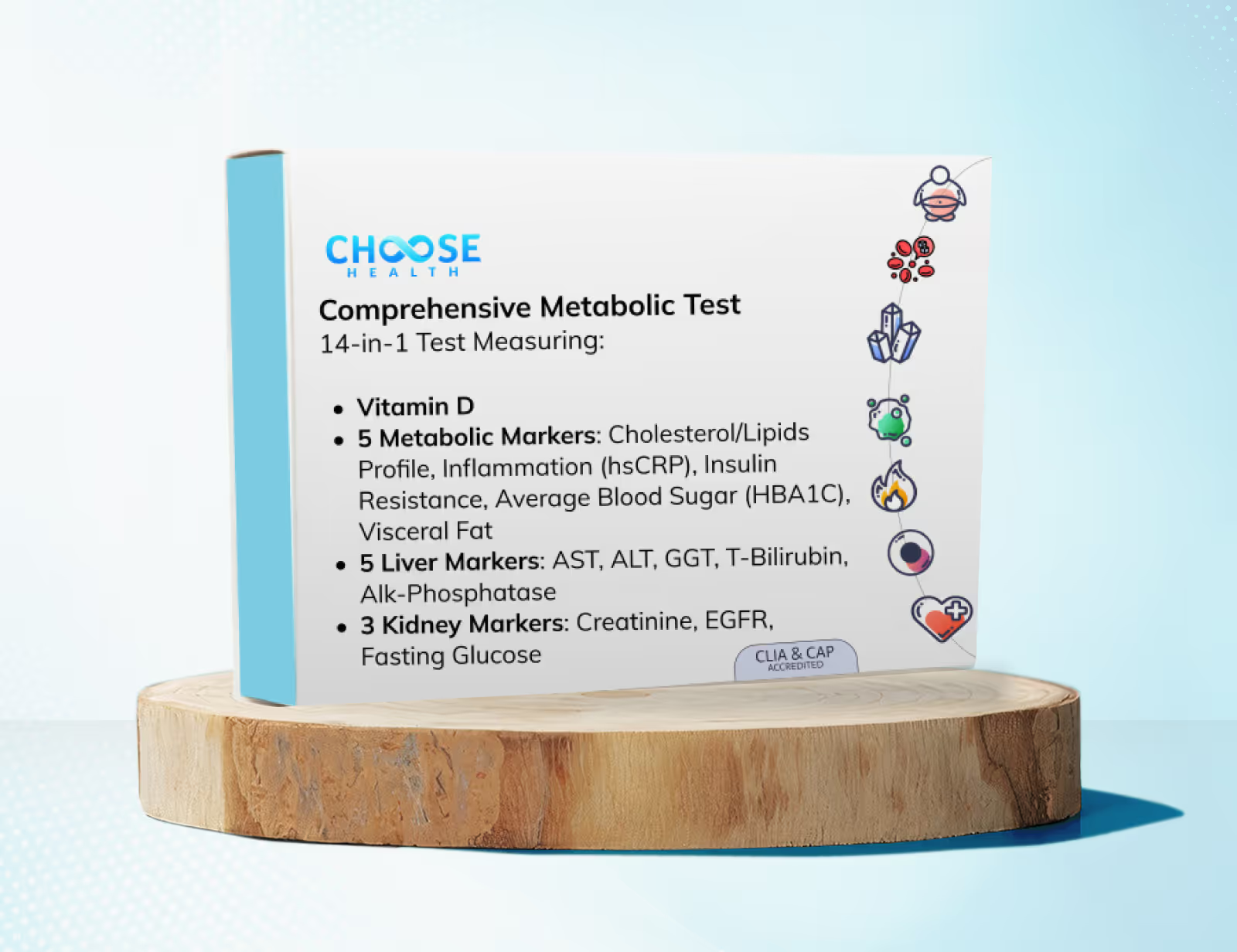
Comprehensive Metabolic Test



A key marker of cardiovascular health. This cholesterol (or lipid) panel measures your total cholesterol, HDL, LDL and triglycerides, showing how fats are moving through your blood and how they affect heart risk.

Estimated from your triglyceride-to-HDL ratio, a validated marker of insulin resistance. When cells stop responding well to insulin, it raises the risk of cardiovascular disease and is a precursor to type 2 diabetes.

An enzyme found mainly in the liver and bile ducts, as well as the kidneys, pancreas, heart and brain. GGT is a sensitive marker of oxidative stress and one of the earliest signals of liver or bile duct strain.

Your average blood glucose over the past two to three months, measured by HbA1c. It gives a longer view than a single glucose reading and is a key marker used to identify your risk for prediabetes and type 2 diabetes.

High-sensitivity C-reactive protein measures general levels of inflammation in your body. Elevated hsCRP can help assess the risk or presence of liver fibrosis, chronic liver disease, cardiovascular disease and more.

Fat stored deep around your internal organs, including your heart, liver and intestines. Unlike fat under the skin, visceral fat releases inflammatory chemicals and hormones that raise metabolic and cardiovascular risk.
One of the two major liver enzymes, AST is crucial for amino acid metabolism. It's also found in muscle and the heart, and it's released into the bloodstream when liver cells are damaged, often read alongside ALT.
One of the two major liver enzymes, ALT helps convert protein into energy inside liver cells. It's found mostly in the liver, so when liver cells are damaged ALT leaks into the bloodstream, making it a key liver marker.

A yellowish substance produced during the normal breakdown of red blood cells. It's carried to the liver, processed and excreted into bile, which aids digestion, so elevated levels can signal the liver is under strain.

An enzyme found in tissues throughout the body, especially the liver, bones, kidneys and intestines. Elevated alkaline phosphatase can point to liver or bile duct issues, while changes may also reflect bone activity.

A waste product created when your muscles use creatine for energy. Because healthy kidneys filter it out steadily, serum creatinine is one of the most reliable indicators of how well your kidneys are clearing toxins.

Estimates how well your kidneys are working by calculating how much blood passes through the glomeruli each minute. Glomeruli are tiny filters in the kidneys that remove waste from the blood, so eGFR is a key kidney score.

Your blood sugar after an overnight fast, used to screen for prediabetes and diabetes. Over time, high blood sugar can damage the tiny blood vessels in your kidneys, gradually reducing their ability to filter waste.

A vitamin and hormone that supports immune, brain and nervous system health. Your body can only absorb calcium, the primary building block of bone, when enough vitamin D is present, making it vital for strong bones.