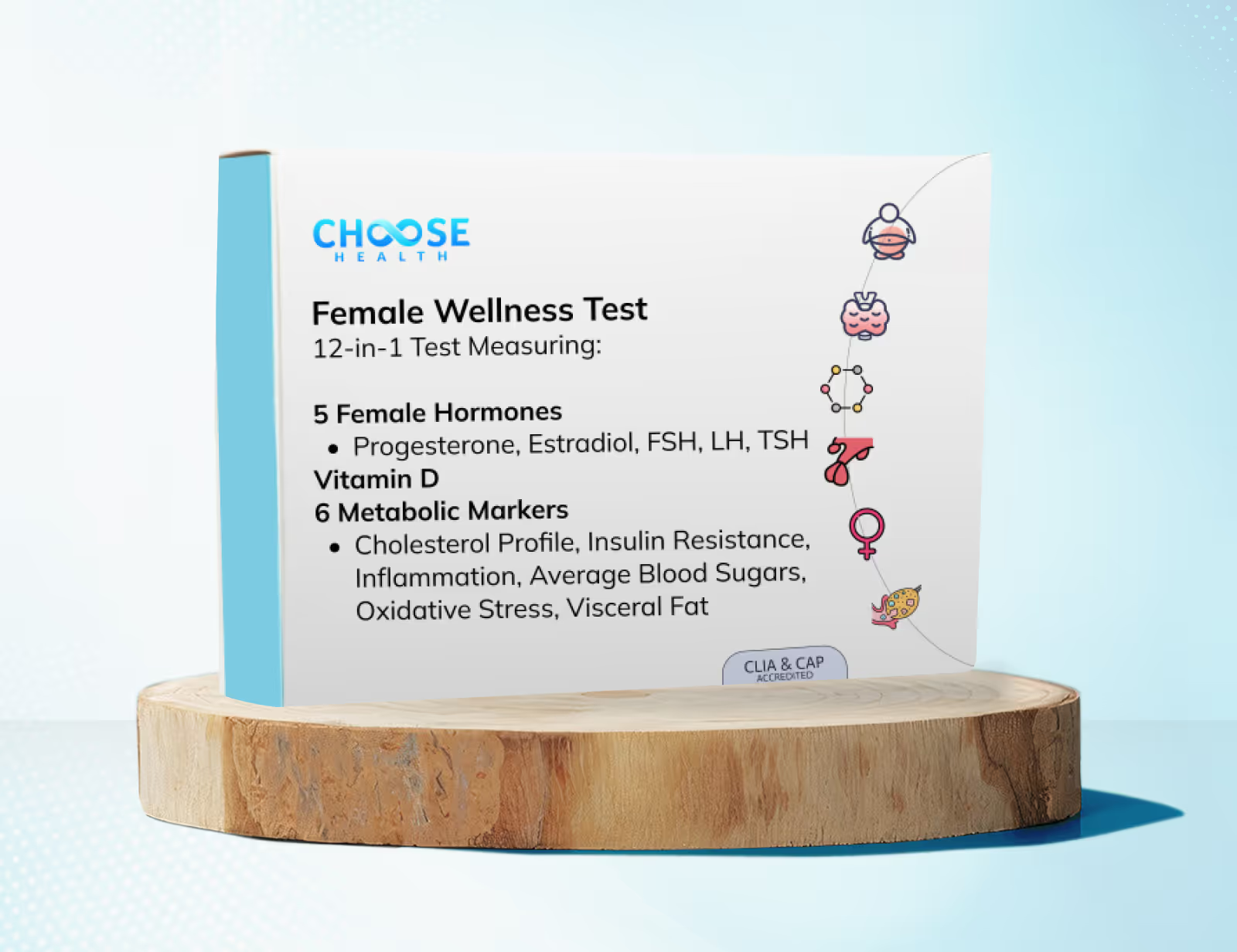
Female Wellness Test


A key reproductive hormone that regulates the menstrual cycle and helps prepare for and maintain early pregnancy. It also supports sleep, mood and bone health, and serves as a building block for other steroid hormones.

The most potent form of estrogen, present in every body. Estradiol supports reproductive health, menstrual cycles and fertility, and also plays a key role in bone density, heart health, mood, brain function and libido.

A pituitary hormone that plays a central role in sexual development and reproduction. FSH stimulates egg follicles to grow in the ovaries and supports sperm production in the testes, making it a key fertility marker.

Released by the pituitary gland, TSH tells your thyroid to produce the hormones T3 and T4, which regulate how your body uses energy. It's usually the first marker checked to spot an underactive or overactive thyroid.

A hormone made by the pituitary gland that signals the reproductive organs. LH triggers ovulation and supports the menstrual cycle, and it also prompts the testes to produce testosterone, making it key to fertility.

A vitamin and hormone that supports immune, brain and nervous system health. Your body can only absorb calcium, the primary building block of bone, when enough vitamin D is present, making it vital for strong bones.
A key marker of cardiovascular health. This cholesterol (or lipid) panel measures your total cholesterol, HDL, LDL and triglycerides, showing how fats are moving through your blood and how they affect heart risk.

Estimated from your triglyceride-to-HDL ratio, a validated marker of insulin resistance. When cells stop responding well to insulin, it raises the risk of cardiovascular disease and is a precursor to type 2 diabetes.
High-sensitivity C-reactive protein measures general levels of inflammation in your body. Elevated hsCRP can help assess the risk or presence of liver fibrosis, chronic liver disease, cardiovascular disease and more.

Your average blood glucose over the past two to three months, measured by HbA1c. It gives a longer view than a single glucose reading and is a key marker used to identify your risk for prediabetes and type 2 diabetes.

GGT is an enzyme found in high levels in the liver, kidney, pancreas, heart, and brain. It is a measurement for oxidative stress and can help detect diseases in the liver or bile ducts.

Fat stored deep around your internal organs, including your heart, liver and intestines. Unlike fat under the skin, visceral fat releases inflammatory chemicals and hormones that raise metabolic and cardiovascular risk.