Comprehensive Liver Function Test
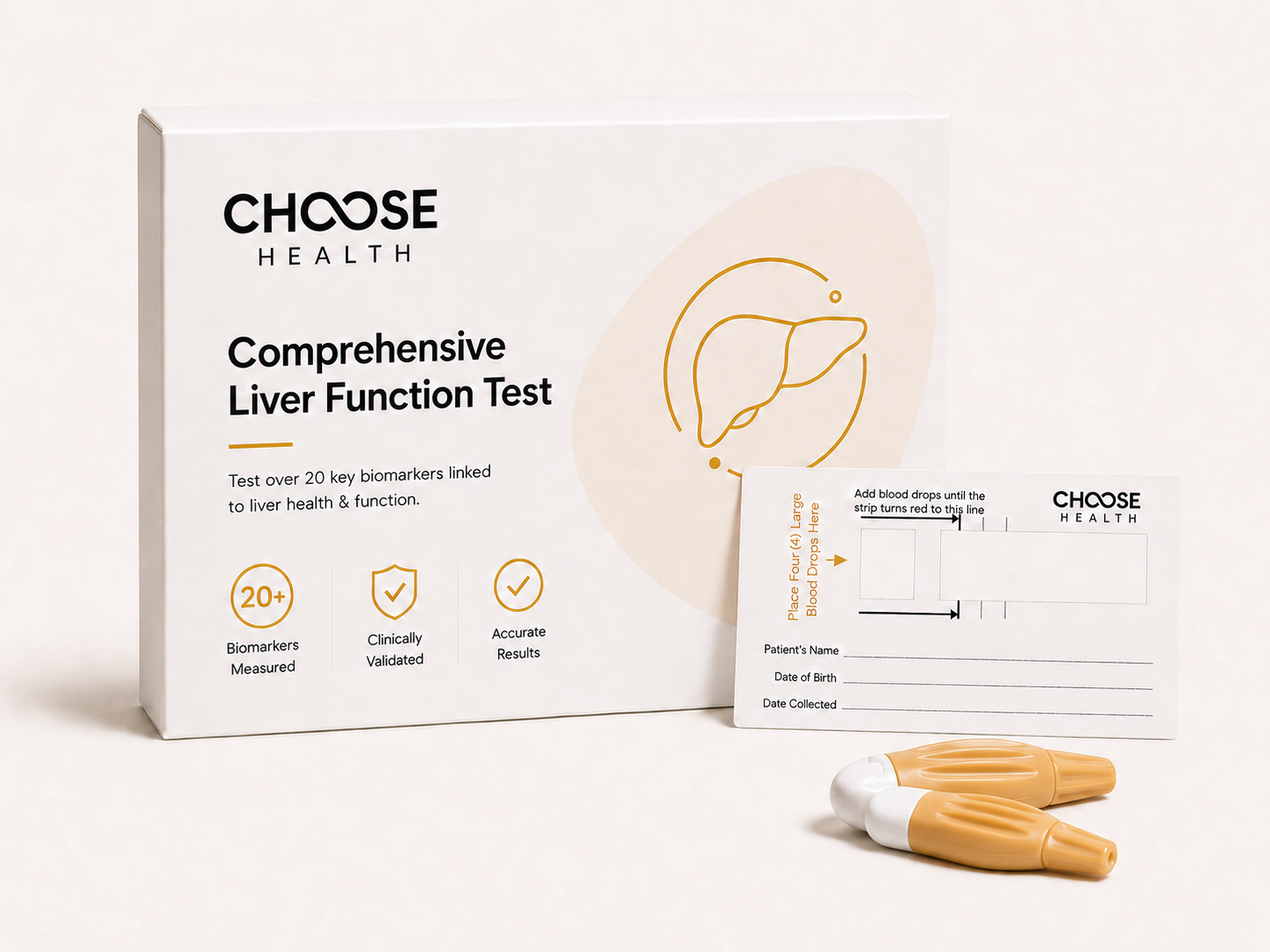
Comprehensive Liver Function Test






HSA/FSA accepted
We accept HSA/FSA cards.
Free Shipping
All tests are shipped free of charge & should arrive in about 4-5 days.
One of the two major liver enzymes, ALT helps convert protein into energy inside liver cells. It's found mostly in the liver, so when liver cells are damaged ALT leaks into the bloodstream, making it a key liver marker.
One of the two major liver enzymes, AST is crucial for amino acid metabolism. It's also found in muscle and the heart, and it's released into the bloodstream when liver cells are damaged, often read alongside ALT.

An enzyme found mainly in the liver and bile ducts, as well as the kidneys, pancreas, heart and brain. GGT is a sensitive marker of oxidative stress and one of the earliest signals of liver or bile duct strain.

Your blood sugar after an overnight fast, used to screen for prediabetes and diabetes. Over time, high blood sugar can damage the tiny blood vessels in your kidneys, gradually reducing their ability to filter waste.

Your average blood glucose over the past two to three months, measured by HbA1c. It gives a longer view than a single glucose reading and is a key marker used to identify your risk for prediabetes and type 2 diabetes.
A yellowish substance produced during the normal breakdown of red blood cells. It's carried to the liver, processed and excreted into bile, which aids digestion, so elevated levels can signal the liver is under strain.

The most abundant protein in your blood, made exclusively by the liver. Albumin keeps fluid inside your blood vessels and carries hormones and nutrients, so low levels can signal the liver isn't producing proteins properly.
Measures the key fats and cholesterol particles in your blood - all produced, processed or cleared by the liver. Imbalances here are among the earliest and most common signs of fatty liver disease and metabolic strain.

The primary protein in HDL, often called "good" cholesterol. ApoA1 helps carry excess cholesterol away from artery walls and back to the liver, so higher levels are associated with better cardiovascular protection.
The main protein on LDL and other plaque-forming cholesterol particles. Each particle carries exactly one ApoB, so it gives a direct count of harmful particles - a more precise predictor of heart disease risk than LDL alone.

The hormone that tells your cells to absorb glucose, with the liver as one of its main targets. Elevated fasting insulin often shows up years before blood sugar rises and is a leading driver of fatty liver disease.

Ferritin is the protein your body uses to store iron, and the majority of it is stored in the liver. Elevated ferritin is a common marker of liver inflammation and can indicate conditions ranging from fatty liver to iron overload.
Iron is an essential mineral, and the liver is the body's main iron storage organ. Both excess and deficient iron levels can damage liver cells, making it a critical marker in a liver assessment.

UIBC measures how much reserve capacity your blood has to bind additional iron. Paired with other iron markers, it helps reveal whether the liver is under stress from iron imbalance.
Transferrin saturation reflects the percentage of your iron-transport protein that is carrying iron. High TSAT can signal iron overload, a condition that causes iron to deposit in the liver and cause progressive damage.
Your health insights,
in three simple steps.
Collect your sample at home, send it to our lab and recieve results securely online in a matter of days.


Customer Satisfaction Guaranteed





Customer experience is our number one priority.
If you have questions or are unsatisfied with any part of the Choose Health journey, please contact us.