



Insulin resistance often develops silently for years. By the time fasting glucose or HbA1c rises, the metabolic dysfunction has usually been building for a while. HOMA-IR can detect that dysfunction earlier, which is why it pairs so well with liver enzyme testing for a complete metabolic picture.
What Is HOMA-IR?
HOMA-IR is a calculated score that estimates insulin resistance using fasting insulin and fasting glucose levels. It was developed in 1985 and has since become one of the most widely used markers in metabolic health research.
The calculation works because insulin and glucose exist in a feedback loop. When cells stop responding to insulin efficiently, the pancreas compensates by producing more insulin. HOMA-IR captures this relationship.
A higher HOMA-IR score indicates greater insulin resistance. A lower score suggests your cells are responding to insulin normally.
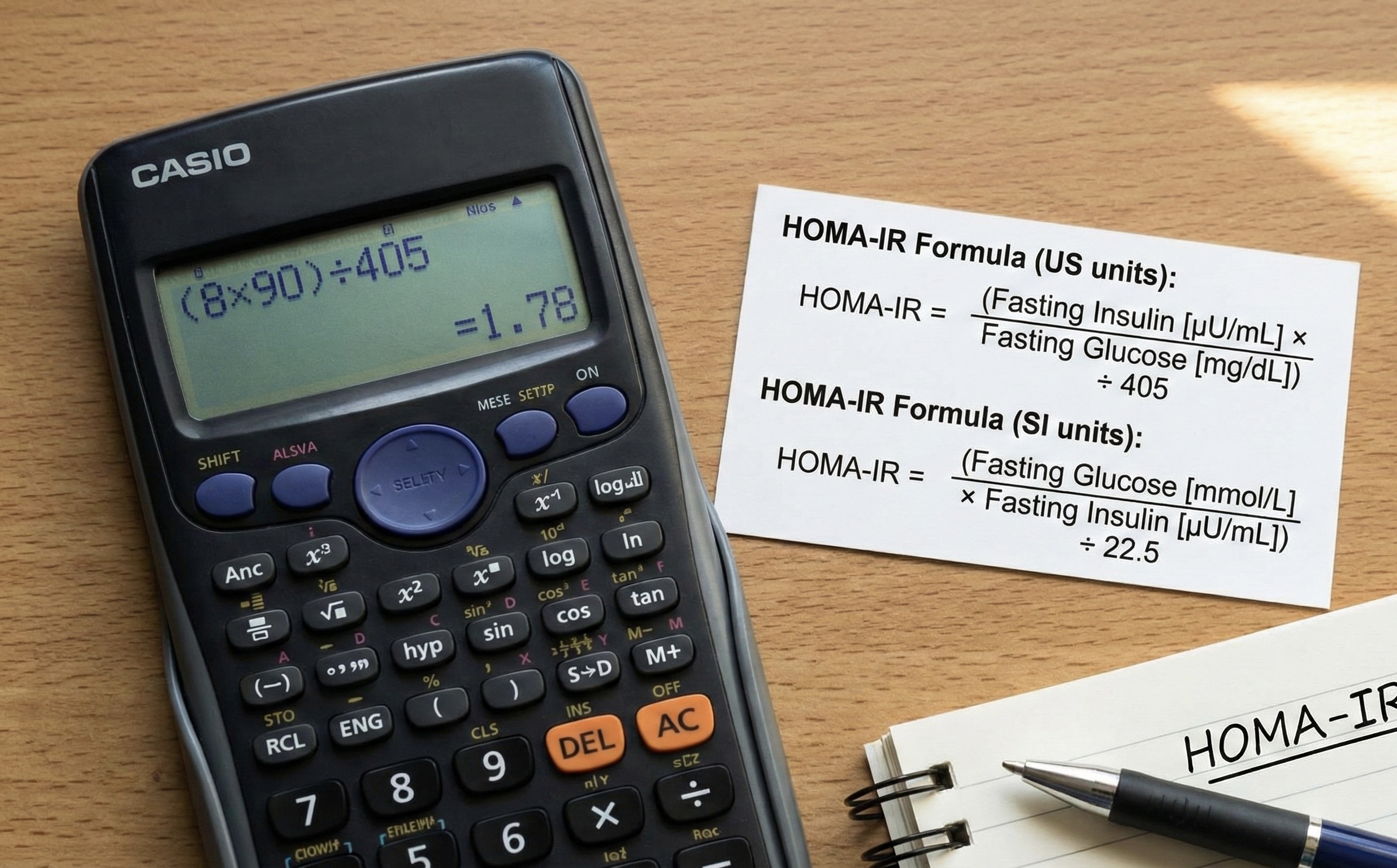
How to Calculate HOMA-IR
The HOMA-IR formula uses fasting values only. Nothing eaten or drunk (besides water) for at least 8 hours before the blood draw.
HOMA-IR Score Interpretation
These thresholds can vary slightly depending on the population studied. However, research shows that HOMA-IR values at or above 2.0 reliably distinguish people with non-alcoholic fatty liver disease from healthy individuals.
Why HOMA-IR Matters for Liver Health
Insulin resistance and liver health are directly connected. When cells become resistant to insulin, the liver starts storing more fat. This is one of the primary pathways to non-alcoholic fatty liver disease (NAFLD).
Testing HOMA-IR alongside liver enzymes like ALT and GGT gives you a more complete metabolic picture than either test alone.
Here is how they work together:
Elevated HOMA-IR often appears before liver enzymes rise. And elevated liver enzymes can occur even when HbA1c looks normal. Testing both markers together catches metabolic dysfunction at different stages.
Who Should Test HOMA-IR?
You should consider testing your HOMA-IR score if you:
- Carry extra weight around your midsection
- Have been told your blood sugar is borderline or prediabetic
- Have a family history of type 2 diabetes
- Have been diagnosed with or suspect fatty liver
- Have elevated triglycerides or low HDL cholesterol
- Have PCOS (polycystic ovary syndrome)
- Want to track metabolic health over time
HOMA-IR is particularly useful for people who want to catch insulin resistance early, before it shows up on standard glucose tests.
What Affects HOMA-IR Scores?
Several factors can influence your insulin resistance level:
Diet - High intake of refined carbohydrates and added sugars increases insulin demand and can drive resistance over time.
Physical activity - Regular exercise improves insulin sensitivity. Even walking 30 minutes daily can help.
Sleep - Poor or insufficient sleep is associated with higher insulin resistance, even in otherwise healthy individuals.
Visceral fat - Fat stored around the organs (abdominal fat) is more metabolically active and contributes to insulin resistance more than fat stored elsewhere.
Stress - Chronic stress elevates cortisol, which can interfere with insulin signaling.
How to Improve Your HOMA-IR Score
If your HOMA-IR score is elevated, these strategies can help:
- Reduce refined carbohydrates and added sugars
- Increase fiber intake from vegetables, legumes, and whole grains
- Build muscle through resistance training
- Get 7-9 hours of sleep consistently
- Manage stress through movement, breathing exercises, or other methods
- Lose 5-10% of body weight if overweight
Small, consistent changes often produce meaningful improvements. Retesting every 3-6 months helps you see whether your efforts are working.
How to Get a HOMA-IR Test
A HOMA-IR test requires two lab values: fasting insulin and fasting glucose. Most standard metabolic panels include fasting glucose but not fasting insulin, so you may need to request insulin specifically.
When to Retest
If your HOMA-IR score is elevated:
- Retest in 8-12 weeks after implementing lifestyle changes
- Track trends over time rather than focusing on a single result
- Pair with liver enzyme testing to monitor the full metabolic picture
If your score is normal, annual testing is reasonable for ongoing monitoring.

Key Takeaways
- HOMA-IR measures insulin resistance using fasting insulin and glucose
- Scores above 2.0 suggest early insulin resistance
- Insulin resistance is a key driver of fatty liver disease
- Testing HOMA-IR alongside liver enzymes provides the most complete metabolic picture
- Lifestyle changes can improve HOMA-IR scores, and retesting helps you track progress