.png)



The U.S. Surgeon General identified loneliness as a public health crisis in 2023. Roughly 80% of people under 18 and 40% of adults over 65 report feeling lonely at least sometimes. A lack of social connection increases the odds of early death by about 50%, which puts it on par with smoking 15 cigarettes a day.
This article covers what the research actually shows, which markers reflect these changes, and what you can track at home.
What You'll Learn:
- How loneliness affects cortisol and your HPA axis.
- The link between social isolation and elevated CRP.
- Why loneliness is now considered a risk factor for type 2 diabetes.
- Which biomarkers reflect these changes.
- What you can do about it.

What Loneliness Does to Your Stress Response
Cortisol is the body's primary stress hormone. It follows a daily rhythm: high in the morning, tapering off through the day. Chronic loneliness disrupts that pattern.
A 2022 study published in Scientific Reports found that romantic relationships have a direct impact on neuroendocrine stress responses. Loneliness was associated with elevated cortisol levels, and people living apart from their partners showed loneliness levels similar to those who were single. The physical presence of a close relationship mattered.
Earlier research from Doane and Adam (2010) identified three distinct time-courses in the loneliness-cortisol relationship: trait, daily, and momentary. Prior-day loneliness was associated with an increased cortisol awakening response the following morning. In other words, a lonely Tuesday can show up in your Wednesday morning cortisol.
A 2021 study published in ScienceDirect found that living alone was associated with a flattened diurnal cortisol slope and higher CRP levels, independent of self-reported loneliness. This suggests that even the structural aspect of being alone, not just the feeling, may alter HPA axis function.
Choose Health measures cortisol, DHEA-S, and the DHEA-S to cortisol ratio. Optimal morning cortisol falls between 6 and 18 ug/dL. If cortisol is persistently elevated or the ratio to DHEA-S is off, chronic stress may be a factor worth investigating.
Loneliness and Inflammation: What CRP Tells You
Chronic loneliness does not just affect how you feel. It changes how your immune system behaves.
A 2021 study in Frontiers in Behavioral Neuroscience found that both trait loneliness and aggregated momentary loneliness were associated with higher CRP levels in older adults. A longitudinal study within the same body of research found that the onset of loneliness was associated with a subsequent increase in CRP.
A large multi-cohort investigation published in 2023 using data from the Danish TRIAGE Study (N=6,144), the Dunedin Longitudinal Study (N=881), and the UK E-Risk Study (N=1,448) found that social isolation was robustly associated with increased systemic inflammation. Childhood social isolation was longitudinally associated with higher CRP and IL-6 levels in adulthood.
A meta-analysis of 14 studies examining over 6,000 participants found a significant association between loneliness and elevated IL-6. Associations with CRP were noted in several studies but were less consistent across all populations. Social isolation, separately, showed stronger correlations with CRP and fibrinogen.
The proposed mechanism is straightforward. Persistent HPA axis activation leads to glucocorticoid resistance, meaning cortisol stays elevated but stops doing its anti-inflammatory job effectively. DNA microarray analyses of leukocytes from lonely individuals found overexpression of pro-inflammatory genes and underexpression of anti-inflammatory glucocorticoid response elements.
Choose Health tests CRP (C-reactive protein). Optimal is below 1 mg/L. Elevated is 1 to 3 mg/L. Highly elevated is above 3 mg/L. If your CRP is persistently in the elevated range and you have ruled out acute infection, chronic psychosocial stress, including isolation, is something to consider. You can learn more about inflammation markers and what they mean for your health.
The Metabolic Connection: HbA1c and Blood Sugar
This is where the research gets particularly concrete.
A study published in PMC (Kobos et al., 2020) found a fivefold higher risk of elevated HbA1c among individuals experiencing loneliness. A separate study examining dyadic loneliness found a cross-sectional association between loneliness and HbA1c levels, and that marital support appeared to buffer against the effect.
A 2020 study in BMC Public Health reported that 80.8% of diabetic patients who also experienced loneliness failed to meet HbA1c control criteria (below 7%).
The HUNT study, a 20-year prospective follow-up, found that individuals reporting the highest levels of loneliness had roughly a twofold higher risk of developing type 2 diabetes (OR 2.19). A large UK Biobank study (N=423,503) replicated these findings, showing that social isolation and loneliness were each independently associated with elevated type 2 diabetes risk. Mendelian randomization analysis in the same body of research suggested potential causal links.
The biological pathway connects directly to the cortisol findings above. Persistently elevated cortisol promotes hyperglycemia, insulin resistance, and visceral fat accumulation. Those three factors are the core drivers of metabolic syndrome. Loneliness also leads to behavioral changes: increased carbohydrate intake, disrupted sleep, and reduced physical activity, all of which compound the hormonal effects.
Choose Health measures HbA1c. Optimal is below 5.6%. Elevated is 5.6% to 6.4% (the prediabetes range). Highly elevated is above 6.4%. If your HbA1c has been creeping upward and you have already addressed diet and exercise, the stress side of the equation, including social connection, may be worth evaluating. Understanding how insulin resistance develops can help put these numbers in context.
How Relationships Protect Your Health
The research does not only show that loneliness harms. It also shows that connection helps.
One study found that being in a supportive marriage was associated with reduced CRP levels by a magnitude comparable to being a nonsmoker, having normal blood pressure, or maintaining a healthy BMI. The social buffering hypothesis suggests that close relationships reduce stress reactivity across neuroendocrine and immune systems.
A review published in Frontiers in Psychiatry (2023) classified loneliness as an immunometabolic stressor that drives inflammation, insulin resistance, and visceral fat accumulation. The flip side of that finding is that social connection may function as an immunometabolic protector.
This does not mean you need a romantic partner to be healthy. The research identifies several types of connection that appear protective: close friendships, community involvement, consistent social interaction, and perceived social support. What matters most is the quality and consistency of connection, not simply the number of people around you.
Which Markers Reflect the Impact of Social Connection
Based on the current peer-reviewed evidence, the following Choose Health markers are relevant:

The pattern most associated with chronic psychosocial stress in the literature is elevated cortisol with a low DHEA-S to cortisol ratio, elevated CRP, and a gradually rising HbA1c. If all three are moving in the wrong direction, it is worth looking at your overall stress load, and social isolation is a legitimate part of that picture.
What the Research Supports Doing
The studies reviewed here suggest that meaningful social connection is a modifiable factor that can influence stress hormones, inflammation, and metabolic markers. The evidence supports a few practical approaches:
- Prioritize consistent, quality social interaction. Research links perceived social support, not just proximity to others, with better biomarker profiles.
- Monitor your stress markers over time. A single cortisol reading is a snapshot. Trends across multiple tests give you a more complete picture.
- Look at your metabolic markers in context. A rising HbA1c alongside elevated CRP and disrupted cortisol may indicate chronic stress, not just dietary factors.
- Recognize isolation as a health variable. The Surgeon General's advisory was not symbolic. Loneliness has measurable biological consequences that show up in blood work.
This article is educational and not a substitute for medical advice. If your markers are outside of optimal range, discuss your results with a clinician.
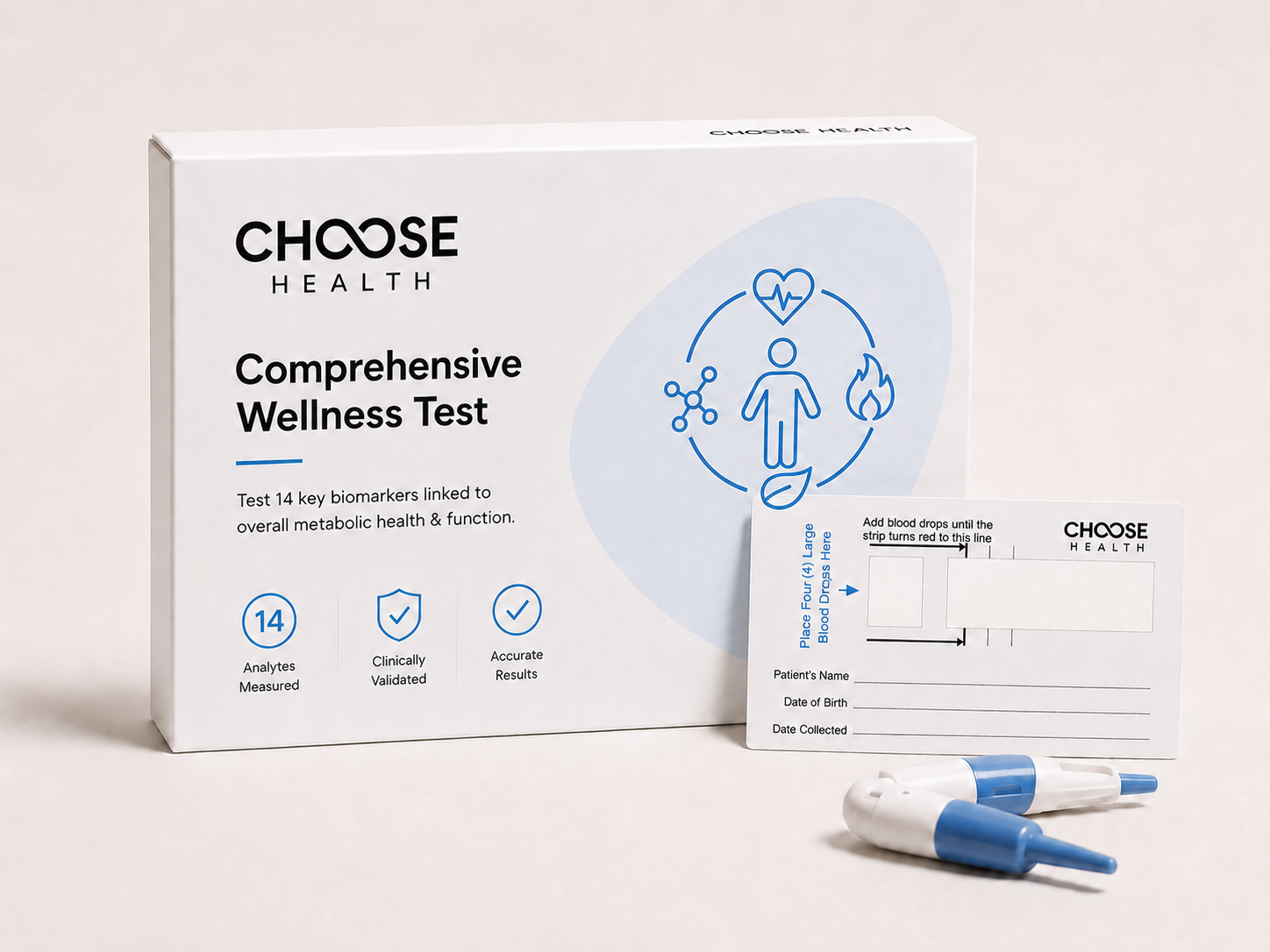
Tracking these markers over time is one of the most practical ways to see how lifestyle factors, including your relationships, affect your health. An at-home blood test can help you establish a baseline and monitor changes.