

.jpeg)
Inflammation isn't all bad. Acute inflammation is your body healing. But chronic inflammation is linked to heart disease, diabetes, cancer and Alzheimer's, and most people have no idea where their levels stand. That answer is in your blood, and you can measure it from a finger-prick sample at home.
Chronic inflammation can be driven by infection, injury, chemical exposure, medical conditions and long-running disease, but also by diet and exercise habits. That last group is the one you can act on. If you're eating foods that raise inflammation and your levels are already elevated, cutting them makes a measurable difference.
The question is how to know where you stand. Specific inflammation markers can be measured and analyzed from a single sample you collect at home.
20+ biomarkers · DBS finger-prick
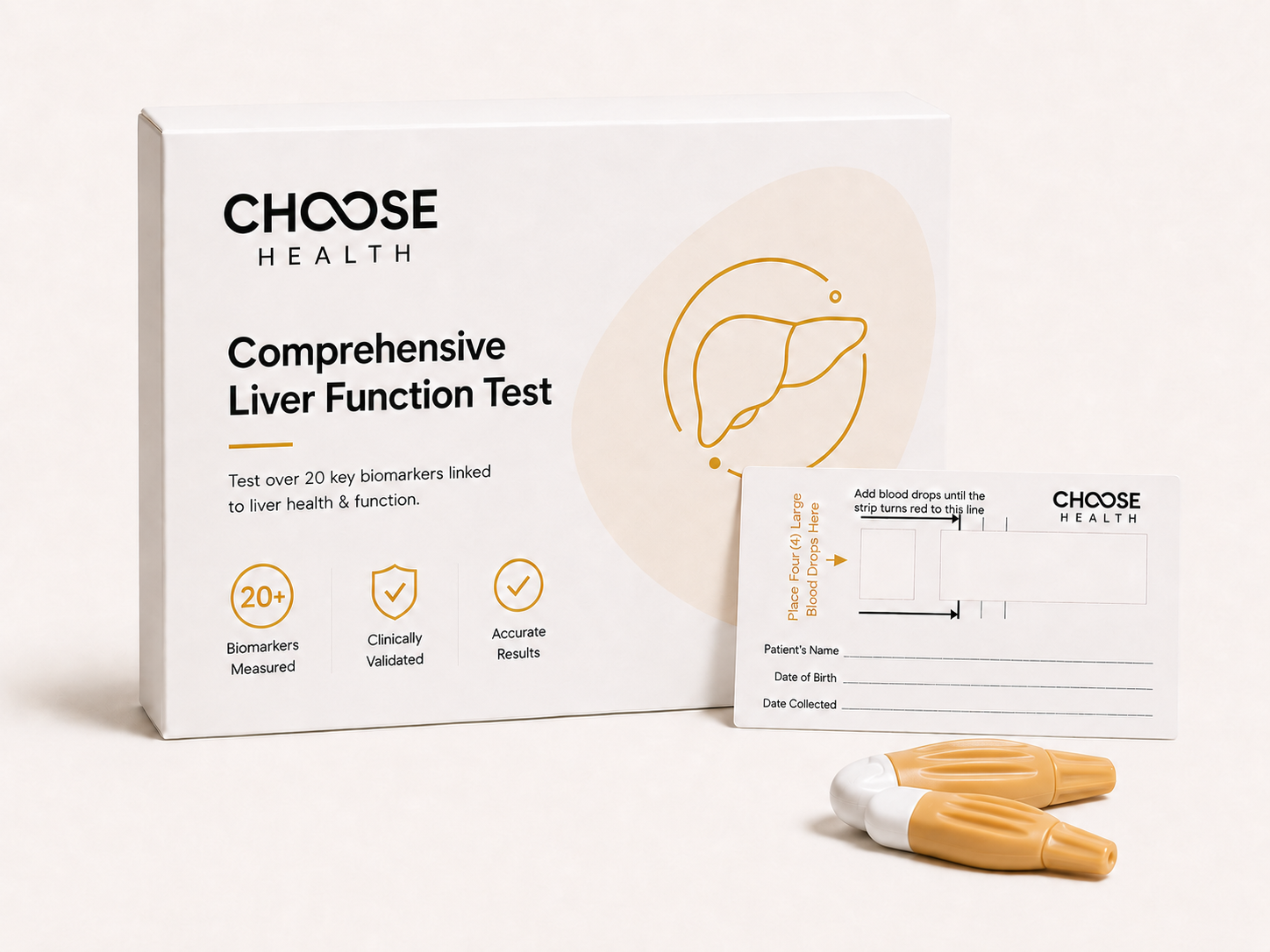
Comprehensive Liver Function Test
The full liver and metabolic picture in one finger-prick, our most-recommended test.
- Liver
- Albumin, AST, ALT, GGT, total bilirubin
- Cardiovascular
- HDL, LDL, triglycerides, ApoA, ApoB
- Metabolic
- Fasting glucose, fasting insulin, HbA1c
- Iron
- Iron status
At-home finger-prick collection. Results in days.

What are inflammation markers
An inflammation marker is a measurement taken from a blood sample that reflects how much inflammation is present in the body. The term is also used for the blood test itself.
7 inflammation markers worth checking
There's one primary marker for measuring inflammation, plus several others that are directly or indirectly connected to it.
01 / Directly related markers
C-reactive protein (CRP)
CRP is the leading indicator of inflammation. It's produced by the liver when inflammation is present, and the level of CRP tracks with how much inflammation is in your body at the time of testing.
Measuring CRP is particularly useful if you:
- Are over the age of 40
- Have a family history of cardiovascular disease
- Have high cholesterol
- Have high blood pressure
Research from Harvard University found that men with high CRP levels were three times more likely to have a heart attack. Reducing inflammation has been shown to lower that risk, which is why knowing your CRP level matters.
Erythrocyte sedimentation rate (ESR)
CRP is considered the standard for measuring inflammation because it gives better diagnostic data, but ESR is another directly related marker. Erythrocytes are red blood cells. ESR is measured by collecting a blood sample, adding a chemical that inhibits clotting, then measuring how quickly the red blood cells separate from the plasma in millimeters per hour. The rate is influenced by proteins that latch onto red blood cells and weigh them down.
A high ESR suggests elevated inflammation. Typical reference ranges:
| Group | Normal ESR range |
|---|---|
| Men | 0 to 22 mm/hr |
| Women | 0 to 29 mm/hr |
Women tend to have naturally higher ESR levels, and ESR can rise with age.
Plasma viscosity (PV)
Plasma viscosity is another secondary marker. Like ESR it indicates inflammation, but it isn't as accurate as CRP. PV is largely redundant to ESR and harder to perform, so it's rarely used and usually only measured after CRP and ESR. The normal adult range is 1.50 to 1.72 mPa.
Procalcitonin (PCT)
PCT is the newest marker in this group. It's more diagnostic in nature and is mainly used to detect or rule out bacterial infections. Results can inform antibacterial treatment plans, and it's used in intensive care units to assess the risk of severe sepsis or septic shock. PCT can also indicate whether certain autoimmune conditions are driving inflammation.
Unless there's reason to suspect a bacterial infection or an underlying condition, PCT testing isn't needed.
02 / Indirectly related markers
Cholesterol lipids
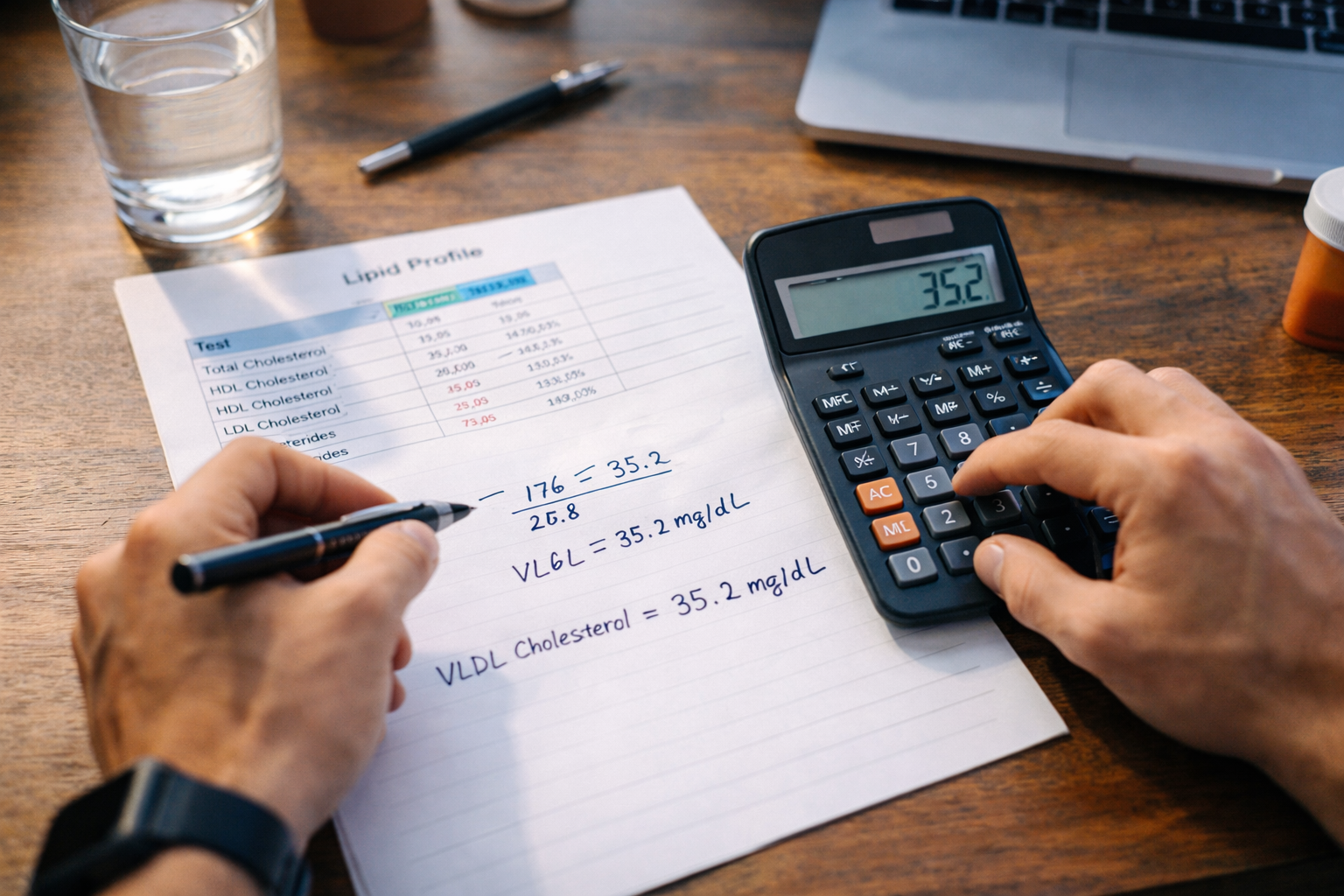
People with high cholesterol may also carry high chronic inflammation, which adds to the risk of heart attack and stroke. That makes a full cholesterol profile worth measuring: total cholesterol, HDL, LDL and triglycerides. Two derived values are worth understanding alongside those, non-HDL cholesterol and VLDL cholesterol.
HDL supports cardiovascular health and LDL works against it, so you need both to calculate your cholesterol ratio, which is total cholesterol divided by HDL. A ratio of 4 or lower is considered healthy, though current guidelines weigh overall risk factors rather than any single threshold.
GGT
GGT is used to assess oxidative stress and liver function, since elevated GGT suggests the liver isn't working as it should. There are two reasons GGT is useful in an inflammation context:
- Inflammation proteins such as CRP are produced by the liver
- Impaired liver function affects sleep, which in turn can raise inflammation
Measuring GGT is less about detecting inflammation itself and more about identifying what's causing it. Liver function and metabolic health are closely tied, which is covered in more depth in our piece on the liver and insulin resistance.
Visceral fat markers
Visceral fat around the organs in the midsection is a physical sign of higher cardiovascular risk. It can also point to chronic inflammation, since chronic inflammation increases visceral adipose tissue. Researchers have described a relationship between systemic inflammation and visceral obesity.
Visceral fat is measured differently from the other markers here. It's estimated by dividing waist circumference by height, a measurement generally considered a better health predictor than BMI.

Where to start
Inflammation is rarely a single number. CRP tells you how much inflammation is present right now, and markers like GGT, cholesterol lipids and glucose help explain where it's coming from and what to do about it. Testing the direct marker on its own tells you that something is happening. Testing the surrounding liver, cardiovascular and metabolic markers tells you why.
That's the case for testing them together rather than one at a time. A single finger-prick sample, collected at home and processed by a CLIA-certified lab, covers all of it, with results in days.
Comprehensive Liver Function Test
Liver, cardiovascular, metabolic and iron markers in one finger-prick.
This article is for informational purposes and is not a substitute for medical advice, diagnosis or treatment. Talk to your healthcare provider about your results and any symptoms you're experiencing.