


What you'll learn:
- How to calculate non-HDL cholesterol
- What the ranges mean
- Why non-HDL may matter more than LDL
- Causes of elevated non-HDL
- When to retest
Many experts now consider it a stronger predictor of cardiovascular risk than LDL alone.
How to Calculate Non-HDL Cholesterol
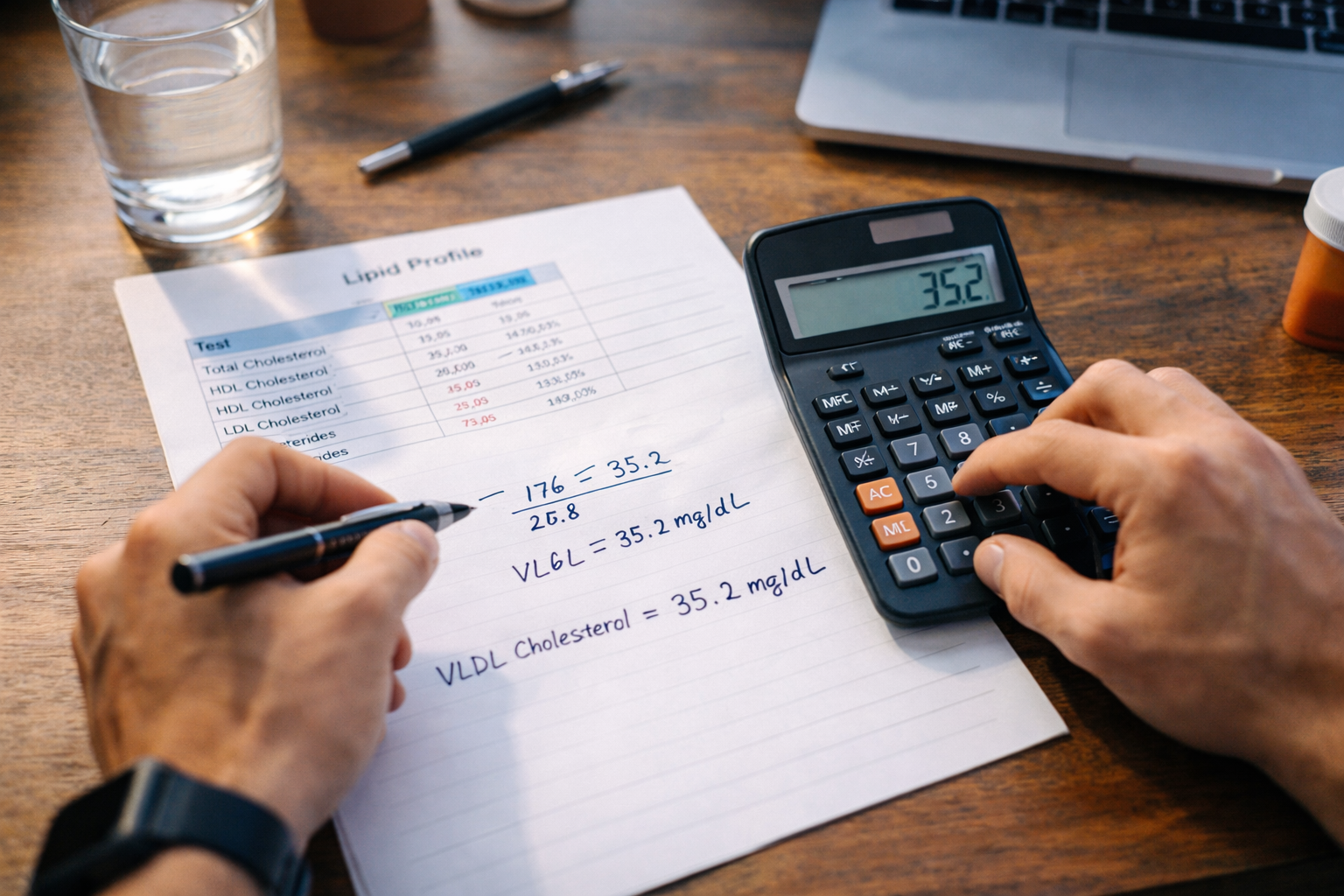
Non-HDL = Total Cholesterol − HDL
Example: Total cholesterol is 210 mg/dL. HDL is 55 mg/dL. Non-HDL is 155 mg/dL.
No fasting required for this calculation. That's one reason some doctors prefer it over LDL.

Non-HDL Cholesterol Ranges
For children and teens (under 20), optimal is below 120 mg/dL.
Your cholesterol ratio provides useful context. But non-HDL gives a more complete picture of atherogenic particles.
What Non-HDL Actually Measures
Non-HDL captures several lipoproteins that contribute to plaque buildup:
LDL (Low-Density Lipoprotein) - The primary "bad" cholesterol. Deposits cholesterol in artery walls.
VLDL (Very Low-Density Lipoprotein) - Carries triglycerides. Eventually converts to LDL.
IDL (Intermediate-Density Lipoprotein) - A transitional particle between VLDL and LDL.
Lp(a) (Lipoprotein a) - Genetically determined. Increases clotting and plaque risk. Standard LDL tests miss this.
What Causes High Non-HDL Cholesterol?
Common causes include:
Genetics - Family history plays a major role. Lp(a) levels are almost entirely genetic.
Diet - Foods high in saturated fat, trans fat, and added sugar increase VLDL and LDL production.
Excess weight - Carrying extra weight, especially visceral fat around the midsection, elevates VLDL and triglycerides.
Physical inactivity - Exercise raises HDL and helps clear triglyceride-rich particles.
Smoking - Damages blood vessels and raises non-HDL.
Some of these may surprise you. Genetics often matters more than diet alone.
How to Lower Non-HDL Cholesterol
For borderline high (130-159 mg/dL):
- Reduce saturated fat intake
- Increase soluble fiber (oats, beans, vegetables)
- Add 150 minutes of moderate exercise per week
- Maintain healthy weight
For high (160+ mg/dL):
- All of the above
- Consider Mediterranean-style eating
- Discuss lipid-lowering medication with your doctor
- Retest in 6-12 weeks to track progress
Some people can improve cholesterol significantly through focused dietary changes. Others need medication, especially when genetics are involved.
When to Test Non-HDL Cholesterol
Most standard lipid panels include total cholesterol and HDL. That's all you need to calculate non-HDL.
Test if you:
- Are over 20 and haven't had a lipid panel recently
- Have family history of heart disease or high cholesterol
- Have diabetes, high blood pressure, or carry excess weight
- Want to track how lifestyle changes affect your numbers
Retest timing:
- Optimal results: Every 4-5 years for routine monitoring
- Borderline: Every 6-12 months while making changes
- High and on treatment: Every 3-6 months initially, then annually once stable

FAQ
Is non-HDL the same as LDL?
No. Non-HDL includes LDL plus VLDL, IDL, and Lp(a). It's a broader measure.
What if my LDL is normal but non-HDL is high?
You have elevated VLDL or other particles. This still increases cardiovascular risk. Discuss with your doctor.
Can I calculate non-HDL without fasting?
Yes. Total cholesterol and HDL are stable regardless of fasting status.
What's a good non-HDL goal?
For most adults, under 130 mg/dL. For those with heart disease or diabetes, many doctors target under 100 mg/dL.