Liver Function Test
A focused seven-marker option measuring AST, ALT, the calculated AST:ALT ratio, GGT, HbA1c, hsCRP and visceral fat. It is the most accessible choice for establishing or retesting a core liver baseline.
Save $15 with LIVER15
If you drink regularly and are cutting back to protect your health, the most useful liver markers to track are AST, ALT, GGT, bilirubin and albumin, ideally alongside the AST:ALT ratio.
.png)


.jpeg)
If you drink regularly, your liver may be under added stress even when you feel completely fine. A blood test gives you a view of where key markers stand today. Retesting after you reduce or stop drinking can show whether those markers are actually moving in the right direction.
Early liver stress often causes no obvious symptoms. The liver has significant reserve capacity and an ability to regenerate, so changes can develop before your body gives you a clear reason to look. Symptoms such as fatigue, abdominal discomfort or jaundice deserve medical attention, but testing can help identify a concerning pattern earlier.
This is exactly why detecting liver damage early is important for people who drink regularly. Blood testing cannot diagnose every form of liver disease, but it can surface changes that warrant follow-up long before symptoms alone would give you the full picture.
Early liver changes can improve when alcohol intake is reduced or stopped, although recovery depends on the type and severity of the damage. Testing gives you a way to establish a baseline, follow the trend and involve a healthcare provider when needed.
You do not have to figure out the testing schedule alone. The process below breaks down what to measure, when a follow-up test may be useful and what patterns deserve medical attention.
Start with a baseline
Choose Health’s at-home liver tests use a simple finger-prick blood sample, so you can establish a baseline now and compare your results again after you’ve had time to make a change.
Explore At-Home Liver TestingSave $30 on the Comprehensive Liver Function Test with code LIVER30, or $15 on the Liver Function Test with code LIVER15.
Before you change anything, it can be useful to document your “before” numbers. Trying to establish a baseline weeks after you have already cut back tells you less about where you started because some markers can move relatively quickly.
A conventional liver panel may include:
Not every testing option includes every marker above. The right panel depends on whether you want a focused check of liver enzymes or a broader look at liver function and related metabolic health.
To interpret change over time, it helps to understand what each marker reflects, the reference range provided by your laboratory and how alcohol may influence the result. The full comparison continues in the body section below.
.png)
You do not need to guess which test makes sense, and you should not have to pay for markers that do not answer your question. Choose Health offers three relevant options depending on how focused or broad you want your testing to be:
A focused seven-marker option measuring AST, ALT, the calculated AST:ALT ratio, GGT, HbA1c, hsCRP and visceral fat. It is the most accessible choice for establishing or retesting a core liver baseline.
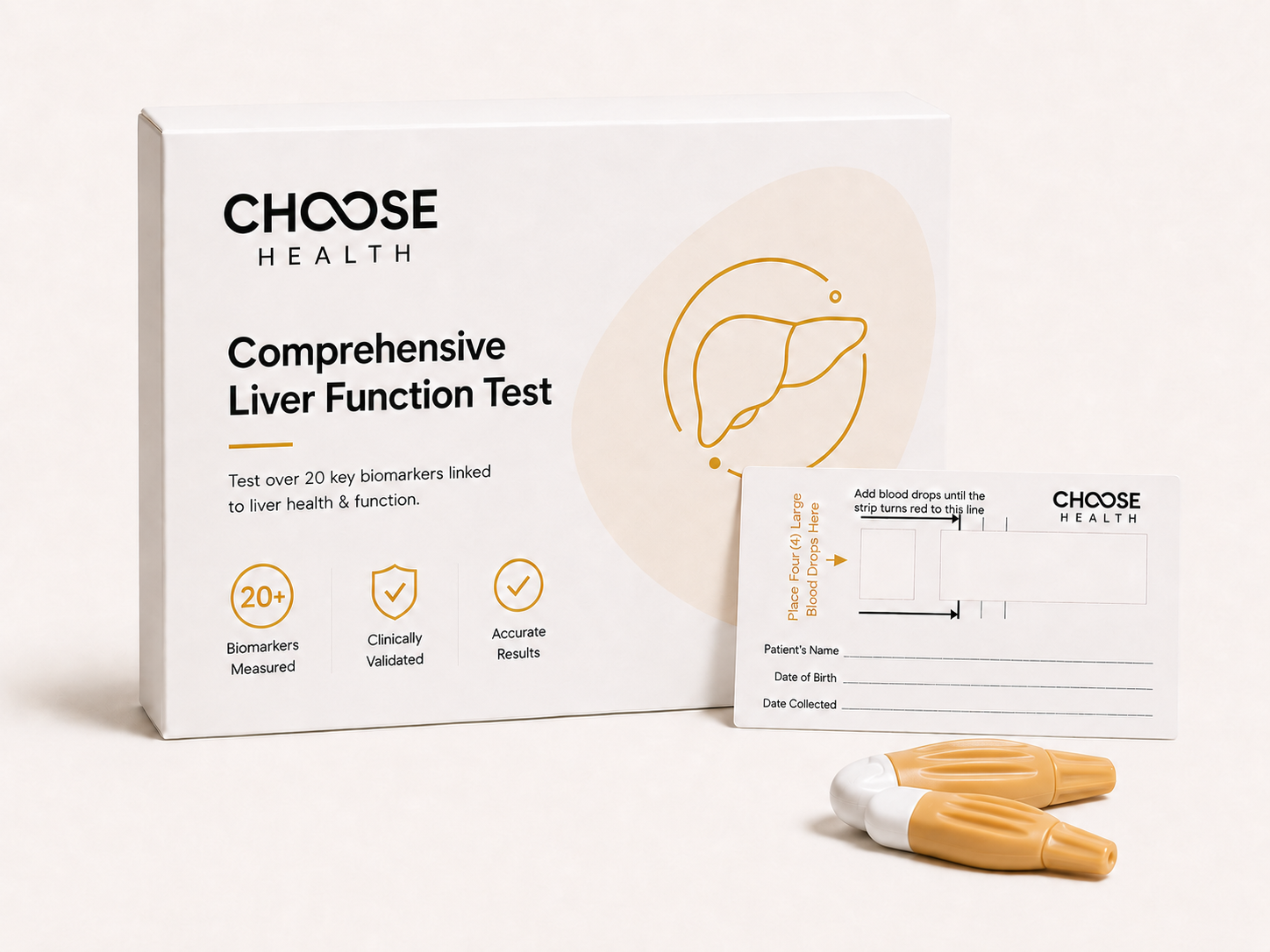
Save $15 with LIVER15A broader test measuring more than 20 liver, cardiovascular, metabolic and iron-related markers, including albumin, total bilirubin, cholesterol, ApoA, ApoB, glucose, insulin, HbA1c, ferritin and iron markers.
Save $30 with LIVER30A 12-marker panel combining liver markers with kidney function, blood sugar and electrolytes. It is useful when you want a broader metabolic check rather than a liver-focused tracking plan.
Explore the Comprehensive Metabolic PanelTesting before and after you reduce your alcohol intake gives you information you can use. Instead of relying only on how you feel, you can see whether measurable markers are improving, staying stable or need clinical follow-up.
Some alcohol-related liver changes can improve, particularly when they are identified early and alcohol intake is significantly reduced or stopped. Early fatty-liver changes may be reversible, while more advanced scarring may improve more slowly or may not fully reverse. A healthcare provider can help determine the severity and the appropriate next steps.
It varies by person, the amount and duration of alcohol use, the starting results and whether another condition is affecting the liver. GGT, ALT and AST may show measurable movement within several weeks after alcohol intake is significantly reduced or stopped, with further changes possible over the following months. Testing around 30 and 90 days can provide useful comparison points, but your healthcare provider may recommend a different schedule.
The Liver Function Test measures seven focused liver and metabolic markers: AST, ALT, the calculated AST:ALT ratio, GGT, HbA1c, hsCRP and visceral fat. The Comprehensive Liver Function Test goes further with more than 20 markers across liver, cardiovascular, metabolic and iron health, including albumin, total bilirubin, fasting glucose, fasting insulin, cholesterol, ApoA, ApoB, ferritin and iron markers. The focused test is useful for an accessible baseline or retest. Comprehensive is better when you want a fuller first look or more context around liver health.
Not necessarily. Liver enzymes can remain within range even when fat accumulation or other early changes are present. Enzymes are useful signals, but they cannot confirm or rule out every liver condition. Your health history, symptoms, other biomarkers and, when appropriate, imaging all contribute to the complete picture.
Both can be useful, and together they provide more context than either marker alone. GGT is sensitive to alcohol exposure but can change for other reasons. ALT and AST provide information about liver-cell injury, while the AST:ALT ratio adds context to their relationship. A healthcare provider can interpret the full pattern alongside your drinking history and other results.
Cutting back on alcohol can make a meaningful difference to liver health, particularly when liver stress is identified early. But how you feel is not always enough to show what is changing internally.
A baseline test gives you a starting point. Retesting gives you something even more useful: a trend. You can see whether markers are improving, staying stable or moving in a direction that deserves a conversation with your healthcare provider.
That makes testing less about chasing a single “good” result and more about understanding how your liver responds to the changes you make over time.
Test your liver markers from home today, then come back to your numbers after you have had time to make a change.
Check Your Liver Health$30 off Comprehensive Liver with LIVER30 · $15 off Liver Function with LIVER15
This article is for educational purposes only and is not a substitute for professional medical advice, diagnosis or treatment.

You do not need to guess which test makes sense, and you should not have to pay for markers that do not answer your question. Choose Health offers three relevant options depending on how focused or broad you want your testing to be:
A focused seven-marker option measuring AST, ALT, the calculated AST:ALT ratio, GGT, HbA1c, hsCRP and visceral fat. It is the most accessible choice for establishing or retesting a core liver baseline.
Save $15 with LIVER15A broader test measuring more than 20 liver, cardiovascular, metabolic and iron-related markers, including albumin, total bilirubin, cholesterol, ApoA, ApoB, glucose, insulin, HbA1c, ferritin and iron markers.
Save $30 with LIVER30A 12-marker panel combining liver markers with kidney function, blood sugar and electrolytes. It is useful when you want a broader metabolic check rather than a liver-focused tracking plan.
Explore the Comprehensive Metabolic PanelTesting before and after you reduce your alcohol intake gives you information you can use. Instead of relying only on how you feel, you can see whether measurable markers are improving, staying stable or need clinical follow-up.
Some alcohol-related liver changes can improve, particularly when they are identified early and alcohol intake is significantly reduced or stopped. Early fatty-liver changes may be reversible, while more advanced scarring may improve more slowly or may not fully reverse. A healthcare provider can help determine the severity and the appropriate next steps.
It varies by person, the amount and duration of alcohol use, the starting results and whether another condition is affecting the liver. GGT, ALT and AST may show measurable movement within several weeks after alcohol intake is significantly reduced or stopped, with further changes possible over the following months. Testing around 30 and 90 days can provide useful comparison points, but your healthcare provider may recommend a different schedule.
The Liver Function Test measures seven focused liver and metabolic markers: AST, ALT, the calculated AST:ALT ratio, GGT, HbA1c, hsCRP and visceral fat. The Comprehensive Liver Function Test goes further with more than 20 markers across liver, cardiovascular, metabolic and iron health, including albumin, total bilirubin, fasting glucose, fasting insulin, cholesterol, ApoA, ApoB, ferritin and iron markers. The focused test is useful for an accessible baseline or retest. Comprehensive is better when you want a fuller first look or more context around liver health.
Not necessarily. Liver enzymes can remain within range even when fat accumulation or other early changes are present. Enzymes are useful signals, but they cannot confirm or rule out every liver condition. Your health history, symptoms, other biomarkers and, when appropriate, imaging all contribute to the complete picture.
Both can be useful, and together they provide more context than either marker alone. GGT is sensitive to alcohol exposure but can change for other reasons. ALT and AST provide information about liver-cell injury, while the AST:ALT ratio adds context to their relationship. A healthcare provider can interpret the full pattern alongside your drinking history and other results.
Cutting back on alcohol can make a meaningful difference to liver health, particularly when liver stress is identified early. But how you feel is not always enough to show what is changing internally.
A baseline test gives you a starting point. Retesting gives you something even more useful: a trend. You can see whether markers are improving, staying stable or moving in a direction that deserves a conversation with your healthcare provider.
That makes testing less about chasing a single “good” result and more about understanding how your liver responds to the changes you make over time.
Test your liver markers from home today, then come back to your numbers after you have had time to make a change.
Check Your Liver Health$30 off Comprehensive Liver with LIVER30 · $15 off Liver Function with LIVER15
This article is for educational purposes only and is not a substitute for professional medical advice, diagnosis or treatment.
Join our newsletter for practical health tips and get $30 off our best-selling at-home blood panel subscription, the Comprehensive Liver Function Test.

.jpeg)


.jpeg)