



October is Liver Cancer Awareness Month, and the timing matters. Liver cancer is one of the few major cancers that has been moving in the wrong direction in the US for decades. According to the American Cancer Society, incidence has tripled over the past 40 years, and about 42,340 people in the US are expected to be diagnosed with primary liver or intrahepatic bile duct cancer in 2026.
The more useful news is that most liver cancer doesn't appear out of nowhere. It usually develops in a liver that has been under strain for years from fatty liver disease, viral hepatitis or heavy drinking, and that strain often shows up in routine bloodwork long before symptoms do. Here's why the awareness month exists, who is at higher risk, what liver biomarkers can and can't tell you, and when to go beyond a blood test.
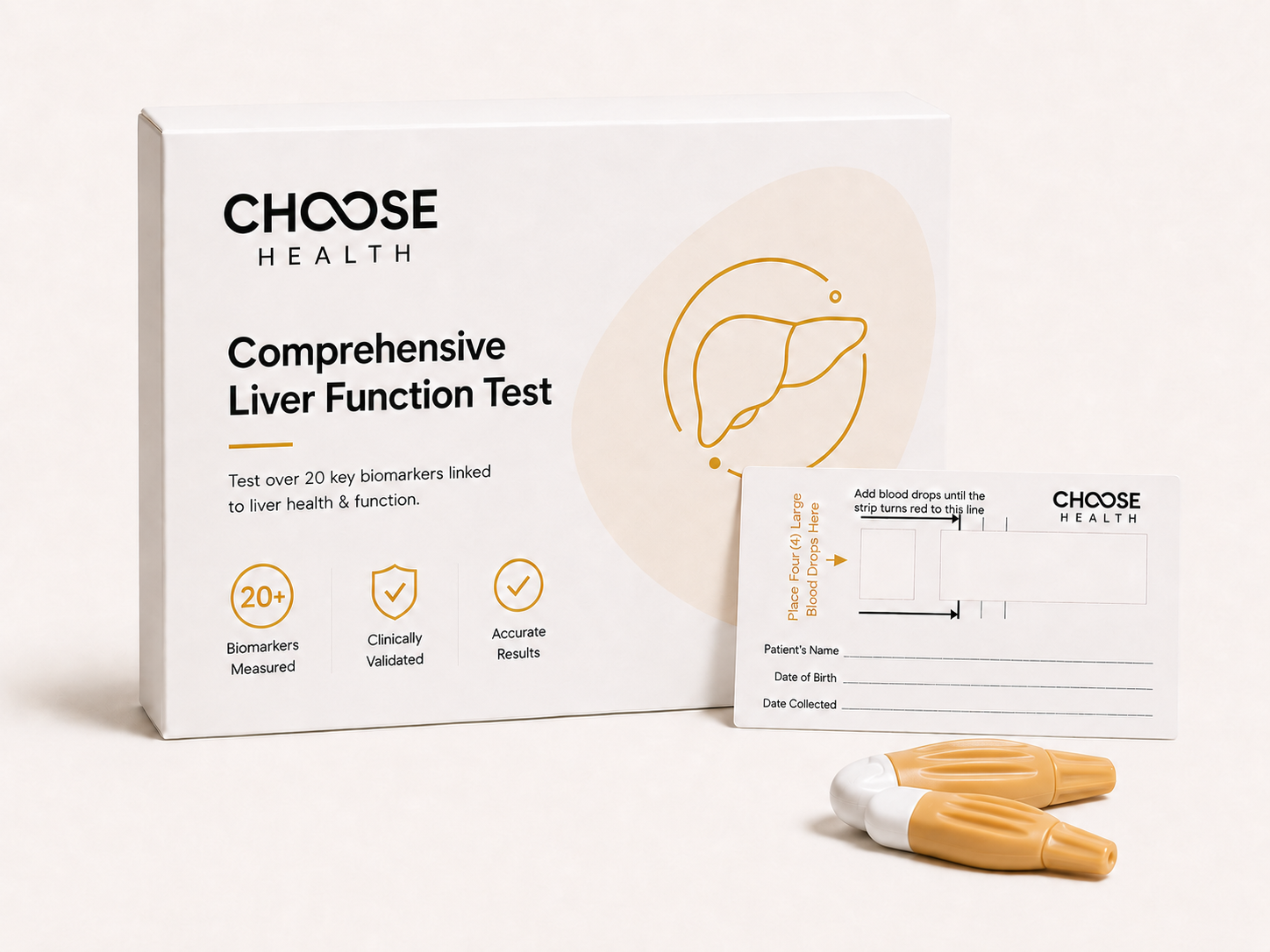
Want a starting point? The Choose Health at-home liver function test checks ALT, AST and GGT from a finger-prick sample, with results in days.

Why Liver Cancer Awareness Month was created
In the US, the month is led by the American Liver Foundation, which marks both National Liver Awareness Month and Liver Cancer Awareness Month every October. The foundation was set up in 1976 by the American Association for the Study of Liver Diseases. It estimates about 100 million Americans live with some form of liver disease, many of which can be reversed if caught early.
The month exists to close a gap. Liver cancer is largely preventable, and the American Cancer Society's Cancer Statistics, 2026 report attributes about 75% of cases to modifiable risk factors. Yet it's usually found late. The goal is to get people to learn their risk before the disease makes itself known.
Liver cancer by the numbers
Men are diagnosed at roughly twice the rate of women, but incidence has stabilized in men and is still rising almost 2% a year in women. Survival figures come from SEER data via the American Cancer Society. Globally, liver cancer accounted for 843,000 new cases and 732,000 deaths in 2024, ranking third in cancer mortality, per Global Cancer Statistics, 2026.
There is real progress. Five-year survival has climbed from 7% in the mid-1990s to 22% today. But the gap between early and late diagnosis is still huge, and early diagnosis starts with knowing you're at risk.
Why it's so often caught late
Early liver cancer rarely causes symptoms. The liver has a large functional reserve, so it keeps working while damage builds. By the time yellowing skin or eyes, unexplained weight loss, or pain or swelling in the upper right abdomen appear, the disease is often advanced.
That's why the real leverage sits upstream. Most US cases develop in a liver already affected by chronic disease, so finding that disease early, and monitoring people who already have cirrhosis, is where most lives are saved.
Who is at higher risk
These are the main risk factors identified by the American Cancer Society:
- Cirrhosis from any cause. Liver scarring is the single biggest risk factor. The AASLD puts annual liver cancer risk at 1% or more in people with cirrhosis.
- Chronic hepatitis B or C. Both can damage the liver quietly for decades, and many people who have them don't know it.
- Heavy alcohol use. This is a leading cause of cirrhosis in the US.
- Fatty liver disease, excess weight and type 2 diabetes. MASLD, formerly NAFLD, is a fast-growing driver of liver cancer. In one large study reported by the AACR, adults with type 2 diabetes had more than double the risk.
- Tobacco use. Smoking is independently linked to higher risk.
- Sex and background. Men are at higher risk. Liver cancer mortality is roughly double in American Indian and Alaska Native people compared with White people, and about 30% to 50% higher in Hispanic and Asian American, Native Hawaiian and Pacific Islander populations.
- Less common factors. These include certain inherited conditions such as hereditary hemochromatosis, and long-term anabolic steroid use.
These factors stack. Someone who drinks regularly and also carries extra weight or has diabetes faces more risk than either factor alone would suggest.
More than one of these sound familiar?
Get a baseline for ALT, AST and GGT from home, with results in days, and bring the numbers to your next doctor's visit.
LIVER30 for $30 off the comprehensive liver test LIVER15 for $15 off the basic liver testWhy routine liver testing matters
A standard liver panel does not detect cancer. What it can do is flag the liver stress and injury that come before most cases, often years before symptoms. These are the markers you'll see most:
- ALT: the most liver-specific of the common enzymes, released when liver cells are injured.
- AST: also rises with liver injury but is found in muscle too, so hard training can push it up. Running your numbers through our AST/ALT ratio calculator adds useful context.
- GGT: often one of the earlier markers to shift, and sensitive to alcohol and bile duct issues.
- Alkaline phosphatase (ALP) and Bilirubin: reflect how well bile is flowing out of the liver.
- Albumin: a protein the liver makes. Low levels over time can point to reduced liver function.
The American Cancer Society notes that elevated liver enzymes can be an early sign of fatty liver disease serious enough to lead to cirrhosis or cancer. For more on each enzyme, read how and why to test your liver enzymes.
The trend matters more than any single result. One reading is a snapshot. Repeat tests show whether your numbers are holding steady, improving or drifting up, which tells you whether a change in drinking, diet or weight is working.
An at-home test gives you a baseline, tracks your trend and flags values worth discussing with your doctor. It can't detect or rule out liver cancer, and it doesn't replace imaging or hepatitis testing. If you're weighing options, our comparison of at-home liver tests breaks down marker coverage, and our guide to testing liver function at home explains collection and retesting.
Who should take further steps
Know your hepatitis B and C status
The CDC recommends all adults 18 and older be screened for hepatitis B at least once using a triple panel test, and for hepatitis C at least once. People with ongoing risk should be tested periodically. Both infections are treatable or manageable, and catching them early prevents much of the damage that leads to cancer.
Ask about fibrosis assessment
The American Diabetes Association recommends people with prediabetes or type 2 diabetes be risk-stratified for liver fibrosis, starting with FIB-4 and following with a liver stiffness scan when needed. If this is you, ask your doctor directly whether it's been done.
Stay on six-month surveillance
The AASLD recommends an abdominal ultrasound and an Alpha-fetoprotein (AFP) blood test about every six months for people in these groups.
See a doctor now
Yellowing of the skin or eyes, unexplained weight loss, a lump or ongoing pain in the upper right abdomen, or swelling in the belly all warrant a prompt medical visit. Don't wait on a routine test.
Retest and talk to your doctor
An elevated enzyme can have many causes, from a hard workout to a medication to a recent night of drinking. Share the result with your doctor, retest and watch the trend rather than reacting to a single number.
Five things to do this October
- Find out your hepatitis B and C status. If you're 19 to 59 and haven't had the hepatitis B vaccine, ask about it too.
- Get a liver enzyme baseline, especially if any of the risk factors above apply to you.
- Take an honest look at your drinking. Alcohol remains a leading cause of cirrhosis.
- Work on metabolic health. Weight, blood sugar and diet all affect liver fat. Start with common foods that are hard on your liver.
- Put a retest on your calendar. Your second result is what turns a snapshot into a trend.
.jpeg)
The bottom line
Liver cancer is rising, largely preventable and usually found late. The real message of Liver Cancer Awareness Month is to stop waiting for symptoms. Most people don't need imaging. They need to know their hepatitis status, know their liver numbers and know whether they're in a group that needs closer monitoring. If you are, talk to your doctor about fibrosis assessment or surveillance. If you're not sure where you stand, start with a baseline.
Start your liver baseline this October
Collect a finger-prick sample at home and get results in days. Then retest in a few months to see which way your numbers are moving.
LIVER30 for $30 off the comprehensive liver test LIVER15 for $15 off the basic liver testMedically reviewed by Dr. Alan Farrell, Chief Medical Officer, Choose Health
This article is for educational purposes only and isn't medical advice. Choose Health tests don't screen for or diagnose cancer. Talk to your healthcare provider about your personal risk and the right screening for you.
.jpeg)


.jpeg)