



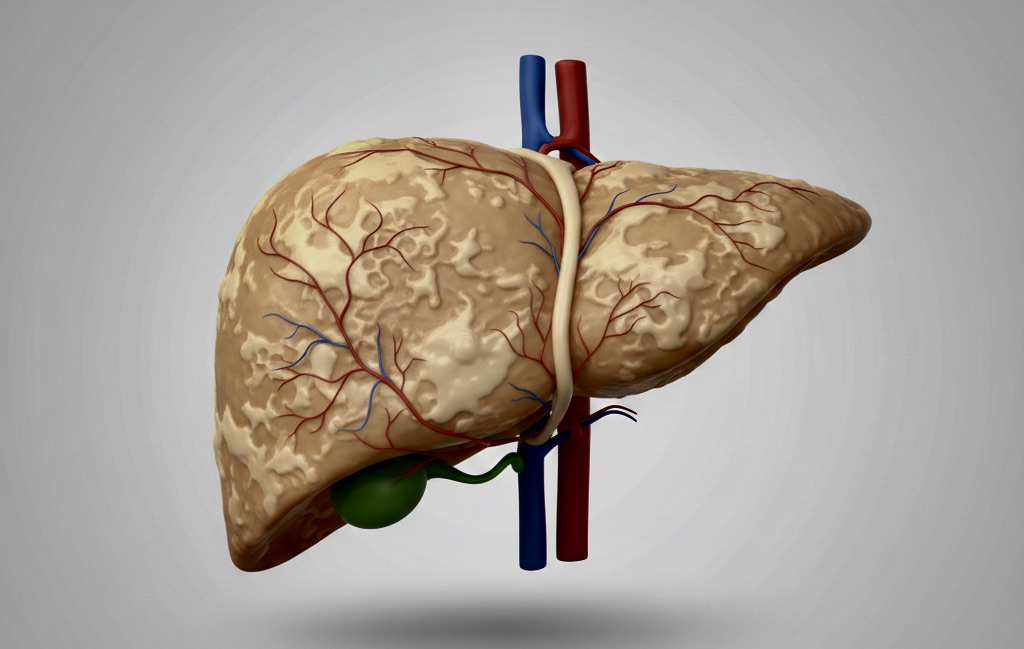
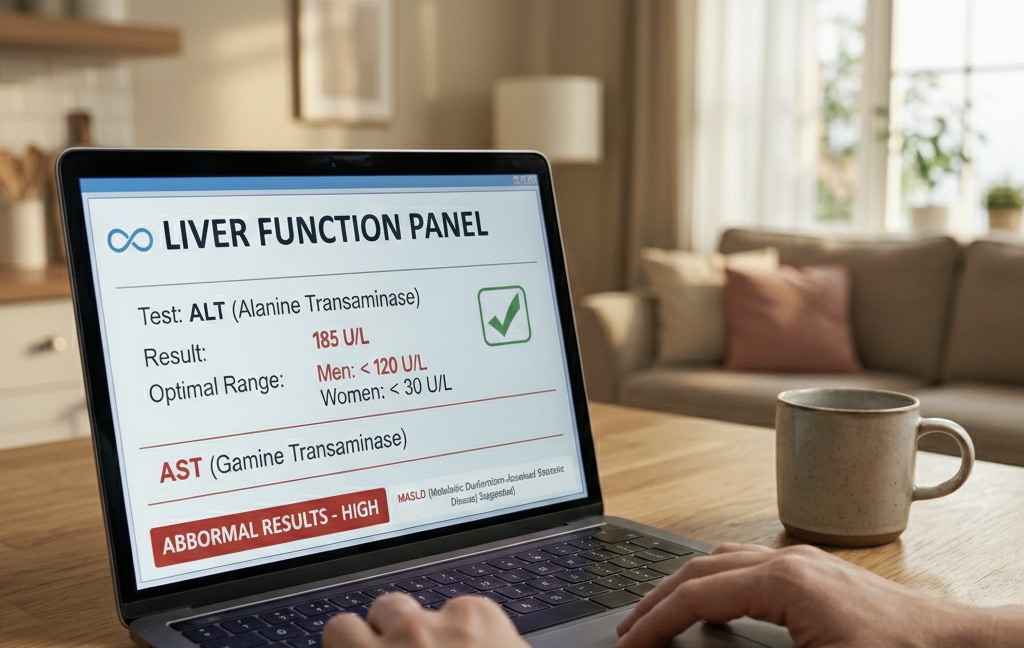
If your recent liver function test showed elevated liver enzymes such as ALT, AST, or GGT: fatty liver disease is one of the most common causes. Fatty liver occurs when excess fat builds up in the liver and begins to affect how well the liver functions. This buildup can irritate the liver, leading to higher enzyme levels on your liver function test (LFT) results.
There are two main types of fatty liver disease:
- Metabolic dysfunction–Associated Steatotic Liver Disease (MASLD): The most common type, often linked to weight, insulin resistance, and metabolic health.
- Alcoholic Fatty Liver Disease (AFLD): Caused by heavy or frequent alcohol use, often showing higher GGT levels.
Both forms can lead to inflammation and progressively rising liver enzymes if not addressed early.
Symptoms of Fatty Liver
Many people with fatty liver disease do not experience symptoms. However, as the condition progresses, some signs may become evident. These can include:
- Fatigue
- Abdominal discomfort or pain
- Weight loss
- Weakness
Fatty Liver Symptoms in Females vs. Males
In females, symptoms might also include polycystic ovary syndrome (PCOS) or hormonal imbalances, which can exacerbate the condition. Recognizing these symptoms early can aid in timely intervention and management.
In males, visible symptoms are generally the same, but research shows that men tend to develop fatty liver and liver scarring at earlier ages and are more likely to progress to advanced stages of the disease. This higher risk is linked to factors such as central obesity, elevated blood pressure, and higher alcohol intake, even though the outward symptoms do not differ significantly between men and women.
How Treatment Strategies Improve Your Liver Test Numbers
Research shows that common fatty liver treatments directly improve your liver enzyme results:
Tracking your liver enzymes over time is the best way to see if your treatment plan is working. Learn how to calculate your ALT:AST ratio here.
Supplements for Fatty Liver
Some supplements may support liver health and aid in managing fatty liver disease:
- Omega-3 Fatty Acids: Found in fish oil, these can reduce liver fat levels.
- Milk Thistle: Known for its liver-protective properties.
- Turmeric: Contains curcumin, which may reduce liver inflammation.
Consult a healthcare professional before adding supplements to your regimen.

Reversing Fatty Liver Disease
Can You Reverse Fatty Liver?
Yes, fatty liver disease can often be reversed, particularly in its early stages, through lifestyle changes such as diet, exercise, and weight loss. However, advanced cases may require more intensive interventions.
Want to understand the long-term outlook? See our full guide on Life Expectancy With Fatty Liver Disease.
Curious about where your liver stands? Take 5 minutes to explore your liver's health score below!
.png)
.jpeg)


.jpeg)