



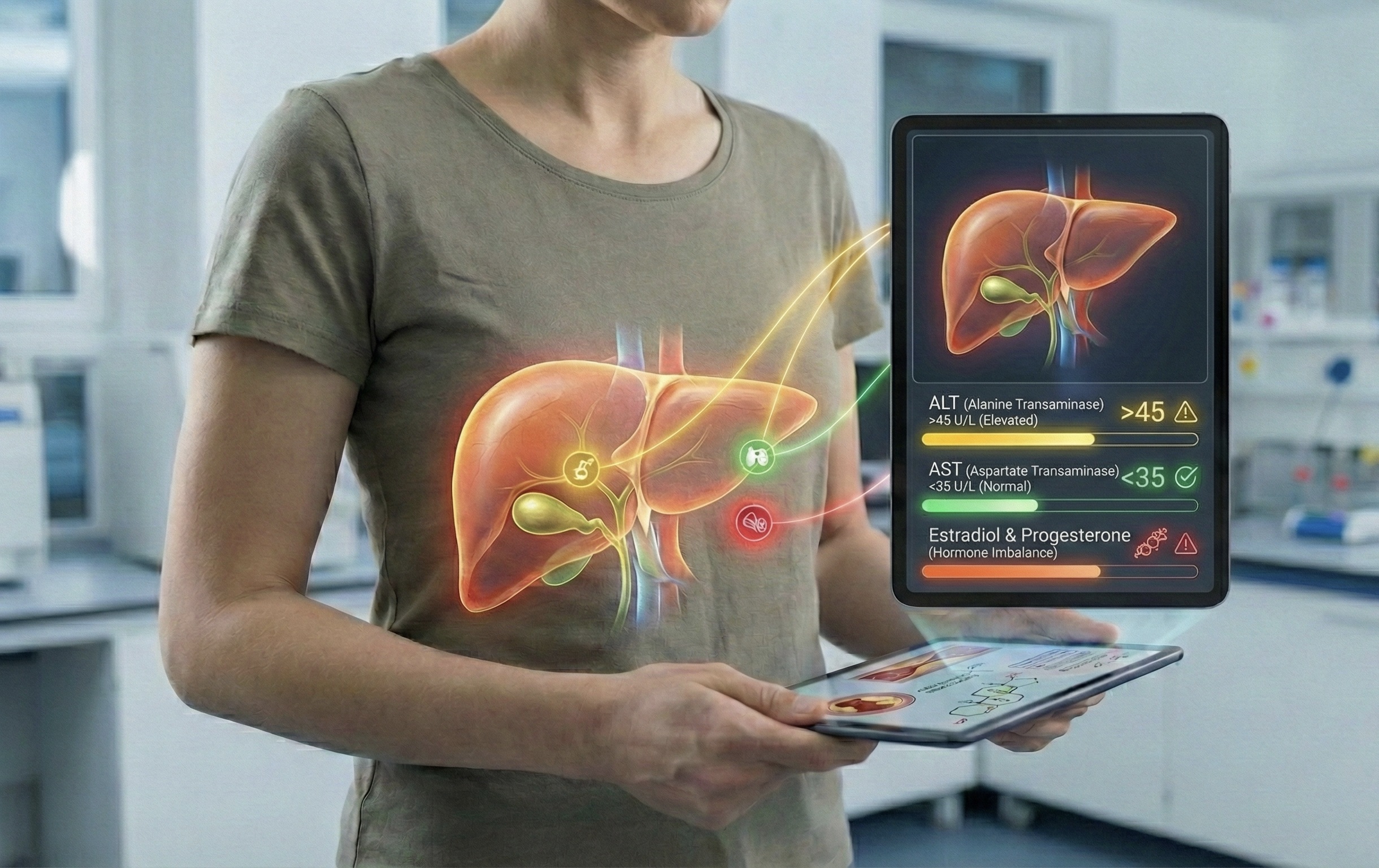
Hormone symptoms usually send people looking at hormones. That's the obvious place to look, and it's often only half the picture, because your liver is what clears estrogen out of your system once it has done its job.
How your liver processes estrogen
Estrogen metabolism runs through a two-phase process in the liver.
Phase I
Hydroxylation
Estrogen is converted into metabolites: 2-OH estrone, 4-OH estrone or 16-alpha-OH estrone. The 2-OH pathway is considered the safest. The 4-OH metabolites can cause DNA damage if they aren't cleared properly.
Phase II
Conjugation
Those metabolites are attached to molecules like glucuronic acid, sulfate or methyl groups. That makes them water-soluble, so they can be eliminated through bile and urine.
When liver function is impaired, both phases slow down. The result is poor estrogen clearance and a buildup of metabolites that were meant to leave.

Estrogen dominance and liver function
Impaired liver function can contribute to estrogen dominance, where estrogen sits high relative to progesterone.
Symptoms that can point this way
None of these confirm estrogen dominance on their own. Together they're a reason to look at both systems.
- Heavy or irregular periods
- Breast tenderness
- Mood swings and irritability
- Weight gain around hips and thighs
- Bloating and water retention
How estrogen protects the liver
The relationship runs both ways. Research shows estrogen protects against fatty liver disease through estrogen receptor alpha in liver cells, which is part of why fatty liver risk rises after menopause.
Studies have found postmenopausal women carry roughly 2.4 times the risk of fatty liver compared with premenopausal women of similar age and weight.
The markers worth seeing together
Liver markers and hormone markers each answer half the question. Read side by side, they tell you which system is actually driving your symptoms.
| Marker | What it tells you |
|---|---|
| ALT | Liver cell stress. Women: <45 U/L optimal |
| GGT | Oxidative stress and bile duct stress. Women: <9 U/L optimal |
| Estradiol (E2) | Your primary estrogen level |
| Progesterone | Balance against estrogen, measured in the luteal phase |
Your liver helps process estrogen, supports healthy progesterone levels and manages oxidative stress. When markers like ALT or GGT are elevated, hormone symptoms tend to be harder to resolve, because you're treating the output while the clearance problem stays in place.
What to do with the results
If hormone symptoms come with elevated liver enzymes, supporting liver health may help. Reducing alcohol, improving gut health for proper estrogen elimination, and addressing metabolic factors all contribute.
If liver enzymes are normal but hormones are out of balance, the driver is more likely ovarian function, stress hormones or something else entirely. That's a different conversation with your clinician, and knowing which one you're having saves months.

Test both systems, not one
Looking at hormones alone tells you what your levels are. Looking at liver markers alone tells you how well you're clearing them. Neither answers the question on its own, which is why women with results inside the reference range can still spend months chasing symptoms.
Each panel below covers one side. Which you start with depends on what you're trying to rule in or out.
The hormone side
Women's Longevity Panel
Estradiol and progesterone alongside testosterone, SHBG, thyroid and cholesterol markers.
- Hormones
- Estradiol, progesterone, total and free testosterone, SHBG
- Also covers
- TSH, cholesterol panel, hemoglobin, hematocrit, creatinine
$195
Explore the panel ↗The clearance side
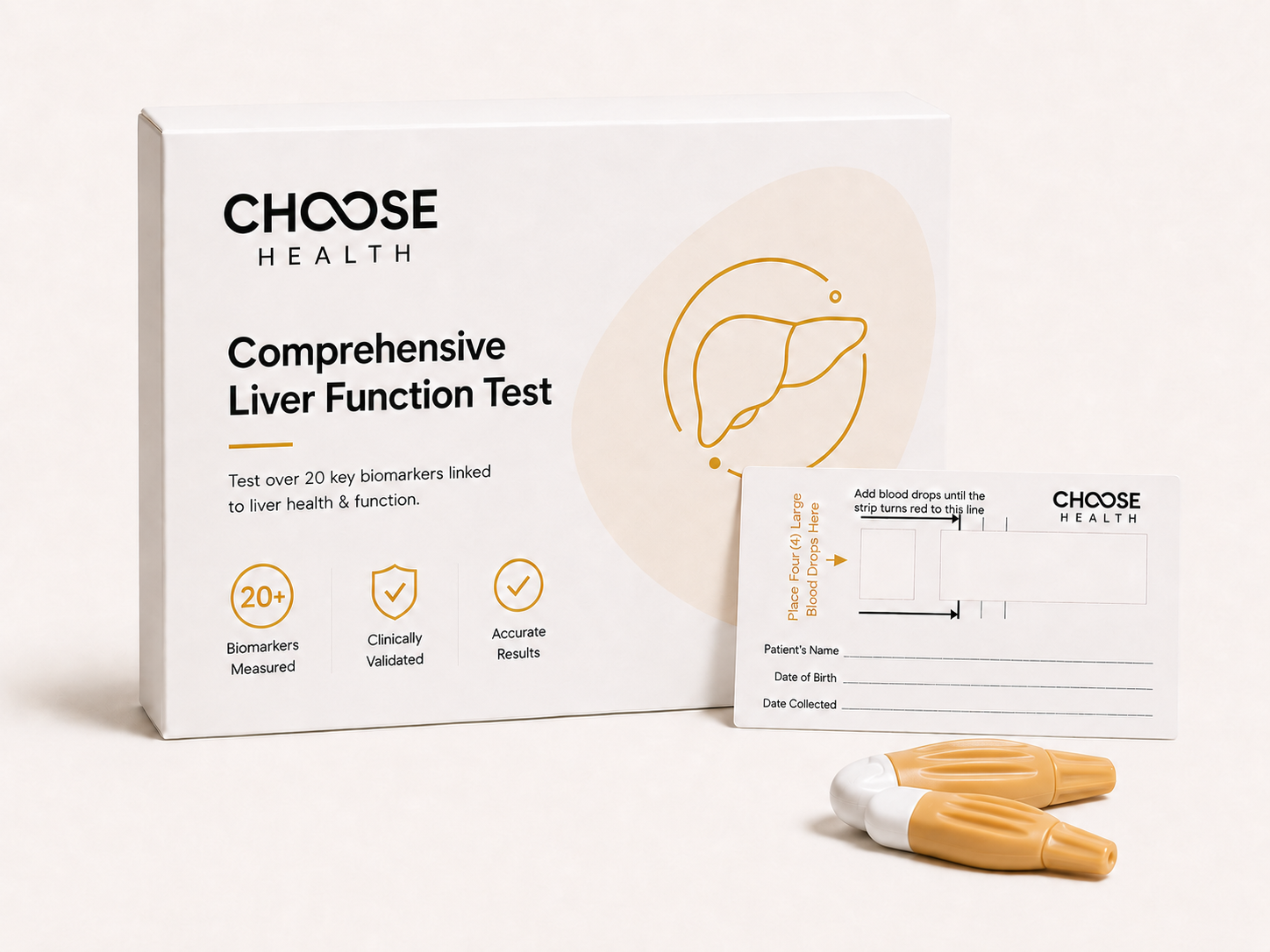
Comprehensive Liver Function Test
ALT, AST and GGT alongside the metabolic markers that influence liver function.
- Liver
- Albumin, AST, ALT, GGT, total bilirubin
- Also covers
- Glucose, insulin, HbA1c, full cholesterol panel, iron
This article is for informational purposes and is not a substitute for medical advice, diagnosis or treatment. Progesterone and estradiol results depend on where you are in your cycle and should be interpreted by a healthcare provider alongside your symptoms and history. Do not start, stop or change hormone therapy based on at-home test results.
.jpeg)


.jpeg)