



.jpeg)
What this guide covers
This guide walks through the timeline of liver recovery, what changes you can expect to see in blood tests, and how your liver repairs itself when alcohol is removed from the equation. For a full overview of what liver tests measure, start with the complete guide to liver function testing.
Measure where your markers start
Test before your 30 days, then use the same test again to measure your progress.
The Liver's Ability to Regenerate
The liver is one of the only organs in the body that can regenerate lost or damaged tissue. According to research from Johns Hopkins Medicine, a healthy liver is the only organ that can fully regenerate tissue.
This regenerative capacity is why taking a break from alcohol can produce measurable results. Liver cells that were stressed or inflamed from processing alcohol can repair themselves relatively quickly once the burden is removed.
However, recovery depends heavily on baseline liver health.
Early-stage liver dysfunction, including fatty liver and mild inflammation, is often reversible. Advanced fibrosis and cirrhosis are far less reversible and may require ongoing medical management.
Week-by-Week Timeline of Liver Recovery
The recovery process is not instant, but changes begin within the first few days.
Turn the 30 days into measurable progress
Test your liver markers before your break, then retest after 30 days to compare the same numbers.
Which Liver Markers Change the Most?
Different liver enzymes respond to alcohol cessation at different rates.
| Marker | Response to 30 Days Alcohol-Free | Typical Improvement |
|---|---|---|
| GGT | Most responsive to alcohol cessation | Often decreases by 50% or more |
| ALT | Decreases as liver inflammation resolves | Gradual decline over 2 to 4 weeks |
| AST | Decreases alongside ALT | May normalize faster than ALT |
| AST:ALT Ratio | Moves toward optimal (below 1) | Improvement depends on baseline |
| hsCRP | Decreases as systemic inflammation drops | Variable response |
GGT deserves special attention. It is one of the most sensitive markers for alcohol-related liver stress and often shows the most dramatic change during a 30-day break. If your GGT was elevated before, you should expect to see significant improvement.
For a deeper understanding of what each marker reveals, review our guide on GGT blood testing.
What Factors Affect How Fast Your Liver Recovers?
Not everyone recovers at the same rate. Several factors influence how quickly your liver markers improve.
Baseline liver health
If your liver was only mildly stressed, recovery is typically faster. More significant damage takes longer to repair.
Duration and amount of alcohol use
Years of heavy drinking create more accumulated damage than occasional social drinking. The liver can detox from alcohol use, but timelines will differ depending on previous volume.
Metabolic health
People with insulin resistance, high blood sugar, or excess abdominal fat may have fatty liver unrelated to alcohol. Removing alcohol helps, but metabolic factors also need to be addressed. Learn more about how metabolic health connects to liver function.
Diet and lifestyle during your break
Eating liver-supportive foods, staying hydrated, and maintaining physical activity can support faster recovery.
Medications and supplements
Some medications and supplements are processed by the liver. If you take these regularly, your liver has additional work even without alcohol.
Can You See Results Without a Blood Test?
Many people feel better during 30 days without alcohol. Common subjective improvements include:
These are real benefits, but they do not tell you what is happening inside your liver. Someone can feel great while still having elevated liver enzymes, and vice versa.
Blood testing gives you objective data. You can see whether your ALT, AST, and GGT actually changed, not just whether you feel different.
Feel the difference. Measure the difference.
Use the same liver test before and after your 30-day break to see whether ALT, AST, and GGT actually changed.

What If Your Markers Do Not Improve?
In most cases, 30 days without alcohol produces measurable improvement in liver markers. But not always.
If your markers did not change significantly, consider these possibilities:
Your baseline was already optimal
If your liver was handling alcohol well, there may not be much room for improvement.
Other factors are elevating your enzymes
Fatty liver from metabolic causes, medications, intense exercise, or underlying conditions can keep liver enzymes elevated even without alcohol.
Thirty days may not be enough
Some people need 60 to 90 days to see significant change, especially if baseline damage was more extensive.
Liver damage has progressed
Advanced fibrosis or cirrhosis does not reverse with abstinence alone. If you suspect this, work with a healthcare provider for further evaluation.
Making Your 30 Days Count
If you are going to take a month off from alcohol, testing before and after helps you understand what you gained. The information also helps you make informed decisions about how you approach drinking going forward.
Some people discover their liver is more sensitive to alcohol than they expected. Others learn their markers improve dramatically with even a short break. Both insights are valuable.
For guidance on setting up a testing plan, read the complete guide to testing your liver at home.
Liver Function Test
The focused option for setting and retesting your liver baseline.
- ALT, AST and AST:ALT ratio
- GGT, HbA1c and hsCRP
- Built for a clear before-and-after comparison
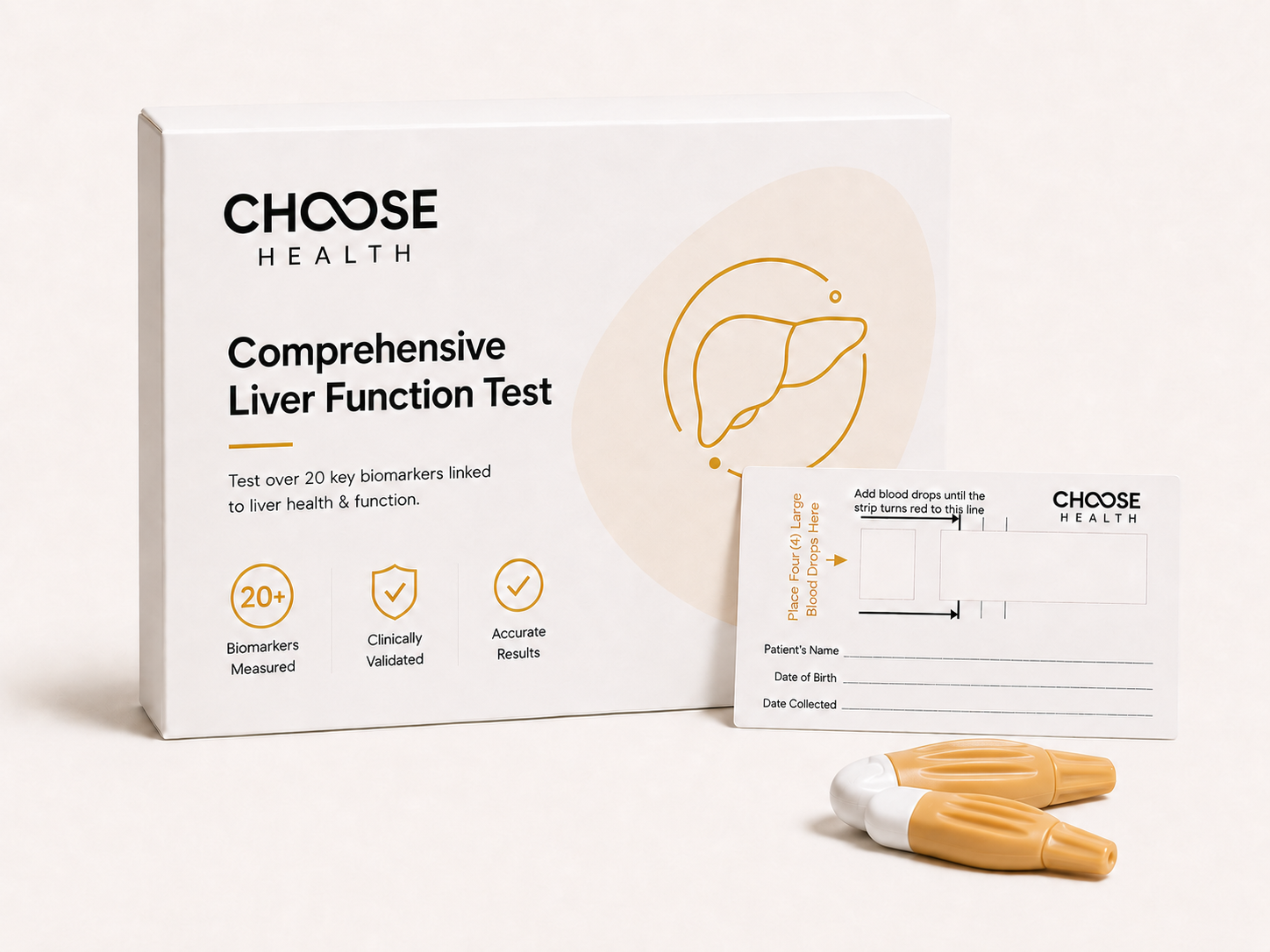
Comprehensive Liver Test
The broader option for liver, metabolic, cardiovascular, and iron markers.
- Core liver enzymes and function markers
- Glucose, insulin and HbA1c
- Lipids, ApoA, ApoB and iron markers
Your Liver Can Recover
Thirty days without alcohol is often enough time to see real, measurable improvement in your liver health. Your liver has the ability to regenerate and repair, and removing alcohol gives it the space to do so.
The question is whether you want to guess at the results or actually measure them.
.jpeg)


.jpeg)