



What Methylation Does (And Why the Liver Matters)
Methylation is a biochemical process that affects DNA repair, detoxification, neurotransmitter production, and cardiovascular health. It requires a compound called SAM (S-adenosylmethionine), which serves as the universal methyl donor in your body.
Here's the key point: your liver produces most of your body's SAM. An enzyme called MAT1A, which is only expressed in adult liver tissue, converts methionine into SAM. When liver function is compromised, SAM production drops, and methylation capacity declines.

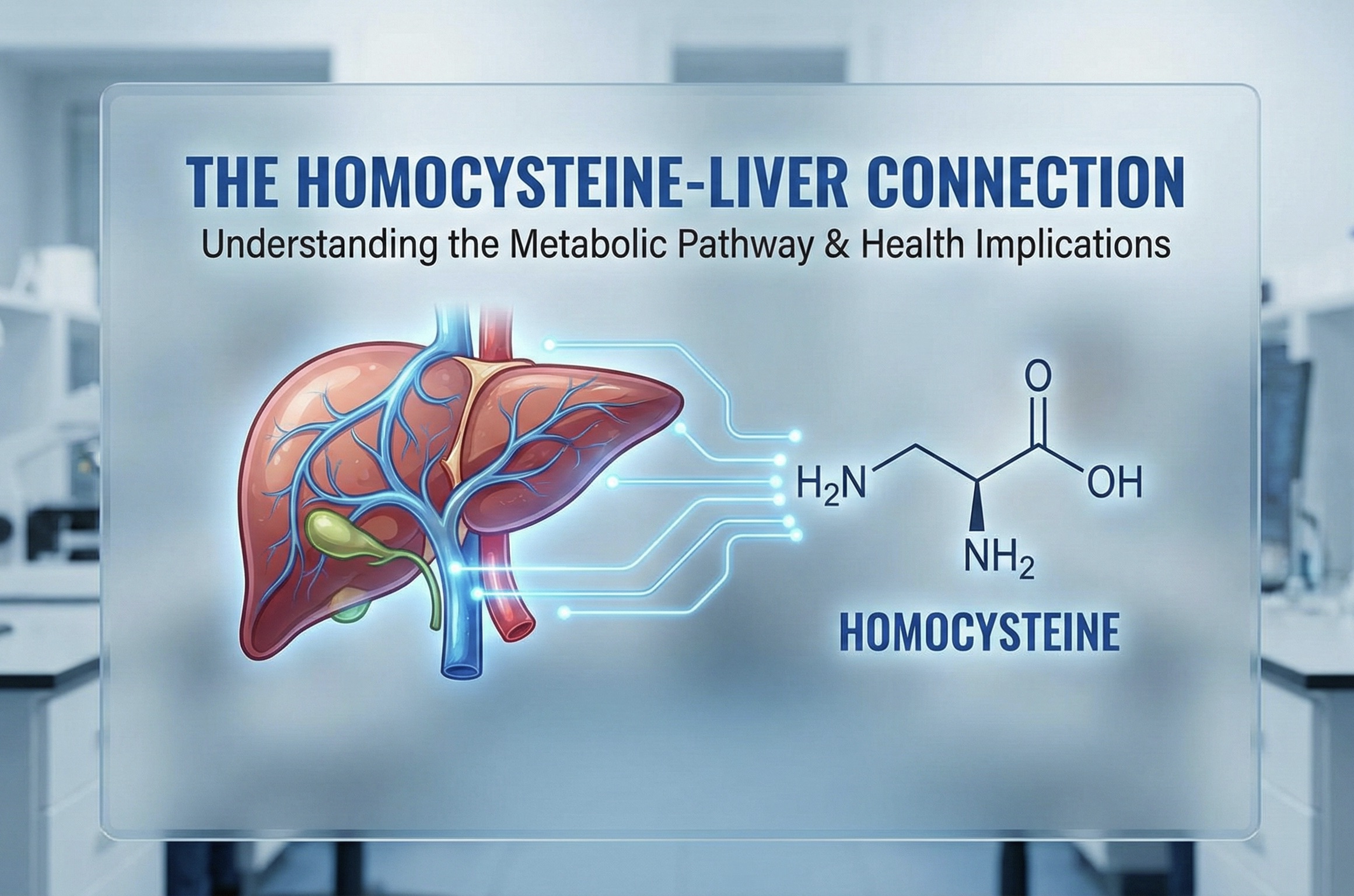
The Homocysteine-Liver Connection
Homocysteine is an amino acid that builds up when methylation isn't working properly. High homocysteine is associated with cardiovascular disease, cognitive decline, and inflammation.
Your liver plays a central role in keeping homocysteine levels in check through two pathways:
BHMT pathway - This enzyme (betaine-homocysteine methyltransferase) is found almost exclusively in the liver. It converts homocysteine back to methionine using betaine as a methyl donor.
Transsulfuration pathway - The liver also clears homocysteine by converting it to cysteine, which is then used for glutathione production (your body's master antioxidant).
When liver function is impaired, both pathways slow down. The result is elevated homocysteine, reduced SAM, and a cascade of downstream effects.
How Liver Disease Affects Methylation
Research shows that fatty liver disease (NAFLD) disrupts methylation through several mechanisms:
- Reduced SAM production due to impaired MAT1A activity
- Lower SAM-to-SAH ratio (the key indicator of methylation capacity)
- Elevated homocysteine from sluggish liver clearance
- Depleted B vitamins (B6, B12, folate) needed for methylation pathways
This creates a feedback loop. Poor methylation contributes to DNA damage and inflammation in liver cells, which further impairs liver function.
Why Testing Both Makes Sense
If you're concerned about methylation or have elevated homocysteine, checking your liver enzymes can reveal whether liver dysfunction is part of the picture.
Key markers to consider:
Someone with elevated homocysteine and elevated liver enzymes likely has a different root cause than someone with elevated homocysteine and normal liver function. Testing both systems helps identify where to focus.

What You Can Do
Liver testing often benefits from repeat testing because markers like ALT and GGT can change over a few months as lifestyle and metabolic stress improve.
Methylation testing is different. Genetic factors do not change, but functional markers such as homocysteine, B12, and folate can shift over time, especially after changes in diet, supplementation, or liver health.
Testing both together provides context. Tracking liver markers shows how your body is responding now, while methylation markers help explain whether key pathways are becoming more efficient over time.
Take 5 minutes to explore your liver's health score below.
.png)
.jpeg)


.jpeg)