




What You'll Learn:
- How alcohol and fructose are metabolized in the liver
- Why both cause fat accumulation and inflammation
- Which liver enzymes reflect this type of stress
- How to monitor your liver health at home

How the Liver Processes Alcohol and Sugar Differently Than Other Nutrients
When you eat protein or complex carbohydrates, your body breaks them down gradually. Glucose from carbohydrates can be used by every cell in your body for energy. Your muscles, brain, and organs all participate in processing it.
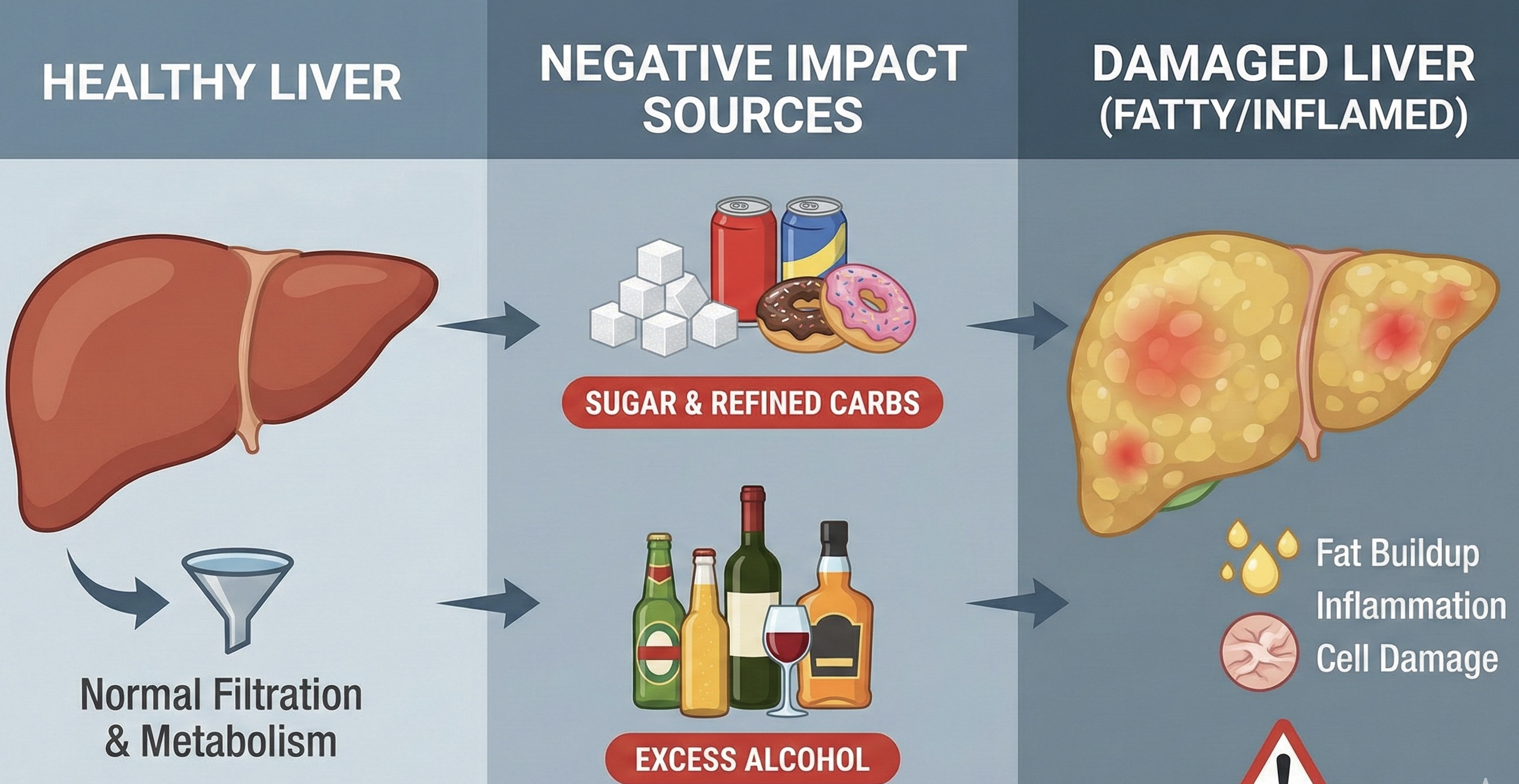
Alcohol and fructose work differently. Both go directly to the liver because most other cells cannot process them efficiently. Your liver becomes the sole metabolic gatekeeper.
When alcohol reaches the liver, it converts to acetaldehyde, a toxic compound that damages cells and triggers inflammation. The liver then converts acetaldehyde to acetate. As Stanford neuroscientist Andrew Huberman explains in his episode on alcohol and health, this process is pro-inflammatory and stresses liver cells at every step.
Fructose follows a parallel path. Unlike glucose, fructose has no required biological function in the body. When you consume it, particularly in concentrated forms like high-fructose corn syrup, your liver converts it directly into fat through a process called de novo lipogenesis. In a Huberman Lab episode with Dr. Robert Lustig, a neuroendocrinologist at UCSF, Lustig explains that fructose inhibits enzymes necessary for normal mitochondrial function, including AMP kinase, which regulates energy balance. As Lustig puts it, alcohol and sugar are "the most metabolically egregious because they affect the liver directly."
The result in both cases: fat accumulates in the liver, inflammation increases, and over time, this can progress to fatty liver disease.
Why Your Liver Treats Soda Like a Cocktail
A study published in the American Journal of Clinical Nutrition found that sucrose-sweetened beverages increase fat storage in the liver, muscle, and visceral fat within just six months. The mechanism mirrors what happens with regular alcohol consumption.
Both alcohol and fructose:
Bypass normal metabolic pathways. Most nutrients get processed throughout the body. Alcohol and fructose funnel directly through the liver.
Generate fat within liver cells. De novo lipogenesis occurs with both substances, leading to hepatic steatosis, the clinical term for fatty liver.
Trigger inflammatory responses. The metabolic byproducts of both alcohol and fructose processing cause cellular stress and release inflammatory markers.
Disrupt the gut-liver axis. Both substances negatively impact gut bacteria, which communicate with the liver through chemical signaling. This can lead to increased intestinal permeability, sometimes called leaky gut, allowing harmful bacteria to reach the liver.
This explains why someone who rarely drinks but consumes large amounts of sugary beverages can develop the same non-alcoholic fatty liver disease patterns seen in heavy drinkers.
Which Liver Enzymes Show This Pattern
When your liver is processing excess alcohol or fructose, specific enzymes leak into your bloodstream. Testing these markers reveals how hard your liver is working.
GGT (Gamma-Glutamyl Transferase) rises with both alcohol consumption and metabolic stress. Optimal levels are below 14 U/L for men and below 9 U/L for women. Elevated GGT often reflects oxidative stress and is one of the earliest markers to change.
ALT (Alanine Aminotransferase) indicates liver cell irritation. Optimal is below 55 U/L for men and below 45 U/L for women. ALT tends to rise with fatty liver regardless of whether the cause is alcohol or sugar.
AST (Aspartate Aminotransferase) reflects broader cellular stress. Optimal is below 45 U/L for men and below 35 U/L for women.
The AST:ALT ratio helps distinguish patterns. A ratio above 2:1, where AST is twice as high as ALT, typically indicates alcohol-related liver stress. A ratio below 1 with elevated ALT is more common in metabolic fatty liver from sugar and processed foods.
What This Means for Your Diet
The practical takeaway is straightforward: your liver does not distinguish between a nightly cocktail and a daily soda habit. Both create metabolic burden.
Whole fruit is different. The fructose concentration in an apple or orange is low, typically 1 to 10 percent, and comes packaged with fiber that slows absorption. The problem is concentrated fructose in processed foods and beverages.
If you want to reduce liver stress, cutting back on both alcohol and added sugars makes a measurable difference. Many people see improvements in their liver enzyme levels within 4 to 8 weeks of dietary changes.
How to Track Your Liver Health
Understanding your baseline liver enzyme levels helps you see how your diet actually affects your health. Trends over time matter more than any single result.
Want to know where your liver stands? In less than 5 minutes you can get your liver health's score - link below.
.png)
.jpeg)


.jpeg)