



Choose Health tests use one of two at-home collection methods: a finger prick or upper arm collection with the Tasso+. Each has its strengths. The method comes with the test you pick, so knowing the difference helps you choose the right test.
Quick answer: A finger prick puts a few drops of blood on a card that dries before it reaches the lab. It's quick and often the more affordable option for focused tests. Upper arm collection uses the Tasso+ device to collect liquid blood into a small tube with one button press. It's easier, measures more biomarkers, like Hemoglobin and Hematocrit, and results typically come back faster.
Here's what each method is like, who it suits, and which tests use it.
Finger prick: quick, compact and familiar
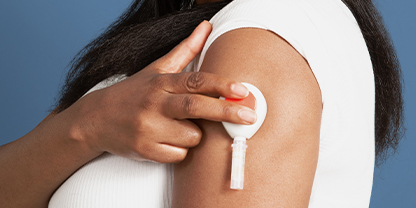
You use a single-use lancet on your fingertip, then let a few drops of blood fall onto a collection card. The card dries, goes in the prepaid return envelope, and the lab reads your biomarkers from the dried blood spot.
Why people like it
- It's often the more affordable option. Focused finger prick tests tend to cost less than broader panels.
- It's quick. Once your hands are warm, collection takes a few minutes.
- It's built for routine retesting. Everything fits in a small mailer, so tracking the same markers every few months is easy.
Who it suits
Finger prick suits you if you want to track a specific area, like liver health or GLP-1 progress, and retest regularly at a lower price point.
Tests that use finger prick
Comprehensive Liver Function Test
For when your liver markers came back off and you want detail on heart health and iron too.
ALT, AST, GGT, Albumin, ApoB, Ferritin and more
View test →Comprehensive GLP-1 Test
For long-term GLP-1 users tracking the full health picture.
HbA1c, Fasting Insulin, Lipase, ApoB, Ferritin and more
View test →Upper arm collection: easier, with more markers
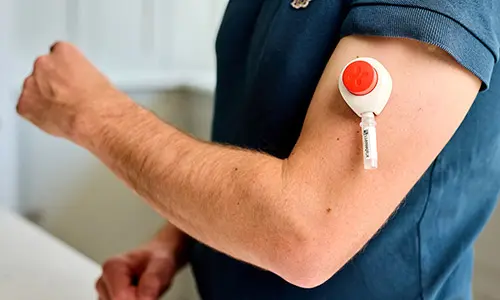
Upper arm collection uses the Tasso+, a single-use device that sticks to your upper arm with a mild adhesive. You press a button and a sterile lancet punctures the skin. Liquid blood then flows into a small collection tube, and collection stops once it reaches the fill line.
Why people like it
- It's easier. Press one button and the device does the work. No squeezing a fingertip or guiding drops onto a card.
- It's designed to be more comfortable than a fingertip poke.
- It measures more. A liquid sample lets the lab run markers a dried spot can't, like Hemoglobin and Hematocrit.
- Results typically come back faster.
Who it suits
Upper arm collection suits you if you want the broadest view in one test, with hormones, heart health and blood count markers together. It's also a good fit if you've struggled to get enough drops from a fingertip.
Tests that use upper arm collection
Men's Longevity Panel
13 key biomarkers linked to long-term male longevity.
Testosterone, PSA, Lipids, Hemoglobin, Hematocrit and more
View test →Women's Longevity Panel
13 key biomarkers linked to long-term female longevity.
Progesterone, Estradiol, Lipids, Hemoglobin, Hematocrit and more
View test →Using the Tasso+ for the first time? Our step-by-step Tasso guide walks through every part of the process.
Finger prick vs. upper arm collection at a glance
| Finger prick | Upper arm (Tasso+) | |
|---|---|---|
| Collection site | Fingertip | Upper arm |
| What you do | Guide drops onto a card | Press a button and keep your arm relaxed |
| Sample sent to the lab | Dried blood spot card | Liquid blood in a small tube |
| Best for | Liver, metabolic and GLP-1 monitoring | Broader panels that include Hemoglobin and Hematocrit |
| Ease | Simple once your hands are warm | One button, hands-free |
| Results | Results in days | Typically faster |
| Price | Often lower, with focused tests | Broader panels, more biomarkers |
How to get a good sample with either method
- Hydrate: drink 8 to 16 ounces of water about 30 minutes before you collect.
- Finger prick: warm your hands first and let your arm hang below your heart. Let drops fall onto the card without smearing.
- Upper arm: do a few arm circles before you apply the device, then keep your arm relaxed at your side until the tube reaches the fill line.
.jpeg)
Choose the test, and the method follows
If you want to track one area, like liver health or GLP-1 progress, and retest often, a finger prick test keeps it quick and affordable. If you want the broadest view in one test, upper arm collection with the Tasso+ is easier and measures more.
Either way, you collect at home, mail your sample, and get your results in days.
Find the right test for you
Browse at-home tests for metabolic, liver, kidney, hormone, thyroid and heart health.
Shop tests →.png)