



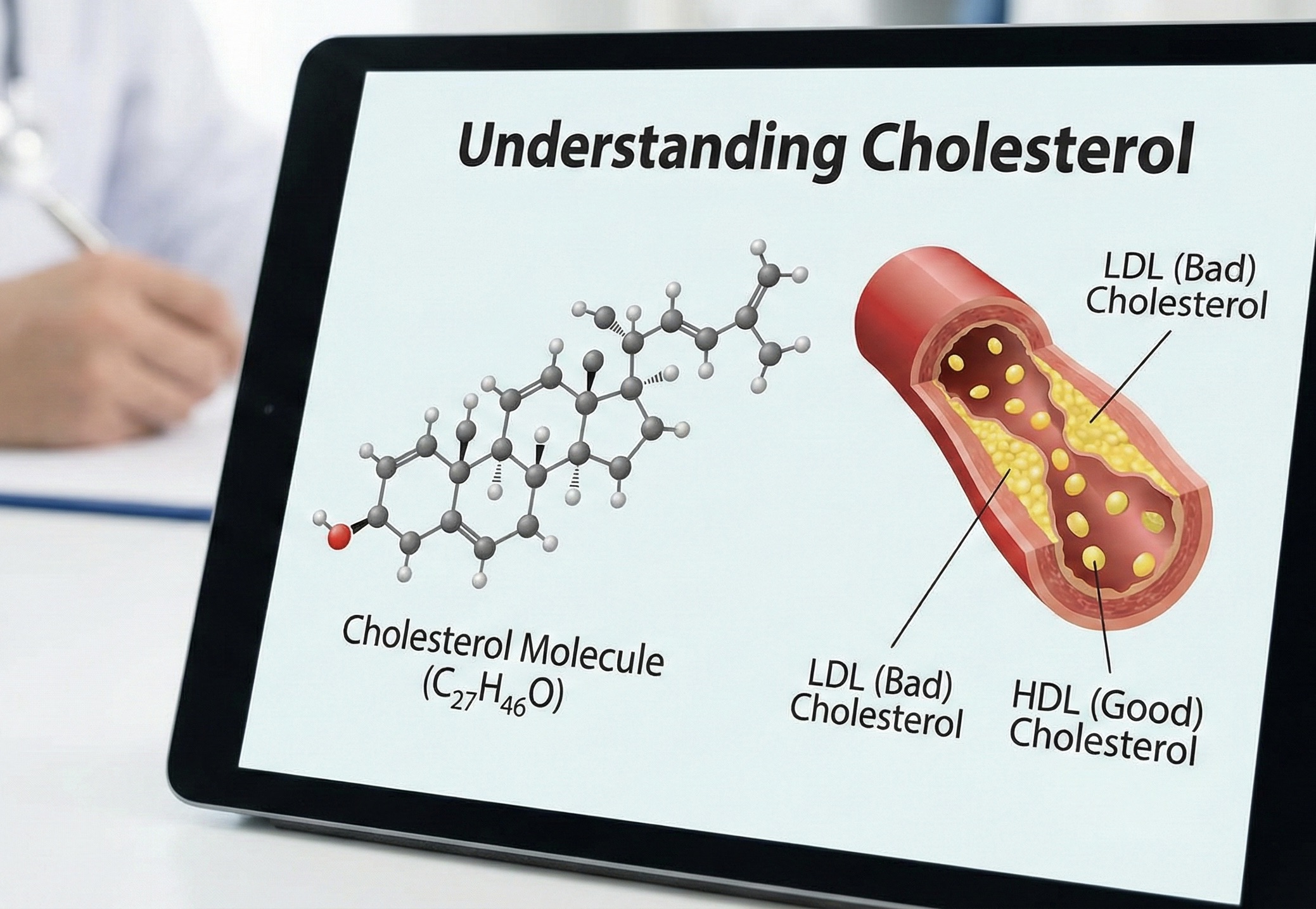
When liver function is compromised, cholesterol metabolism often goes sideways. This is why people with fatty liver disease frequently have abnormal lipid panels, even if their diet is reasonable. Understanding the liver-cholesterol connection helps explain why testing both systems together gives you actionable information.
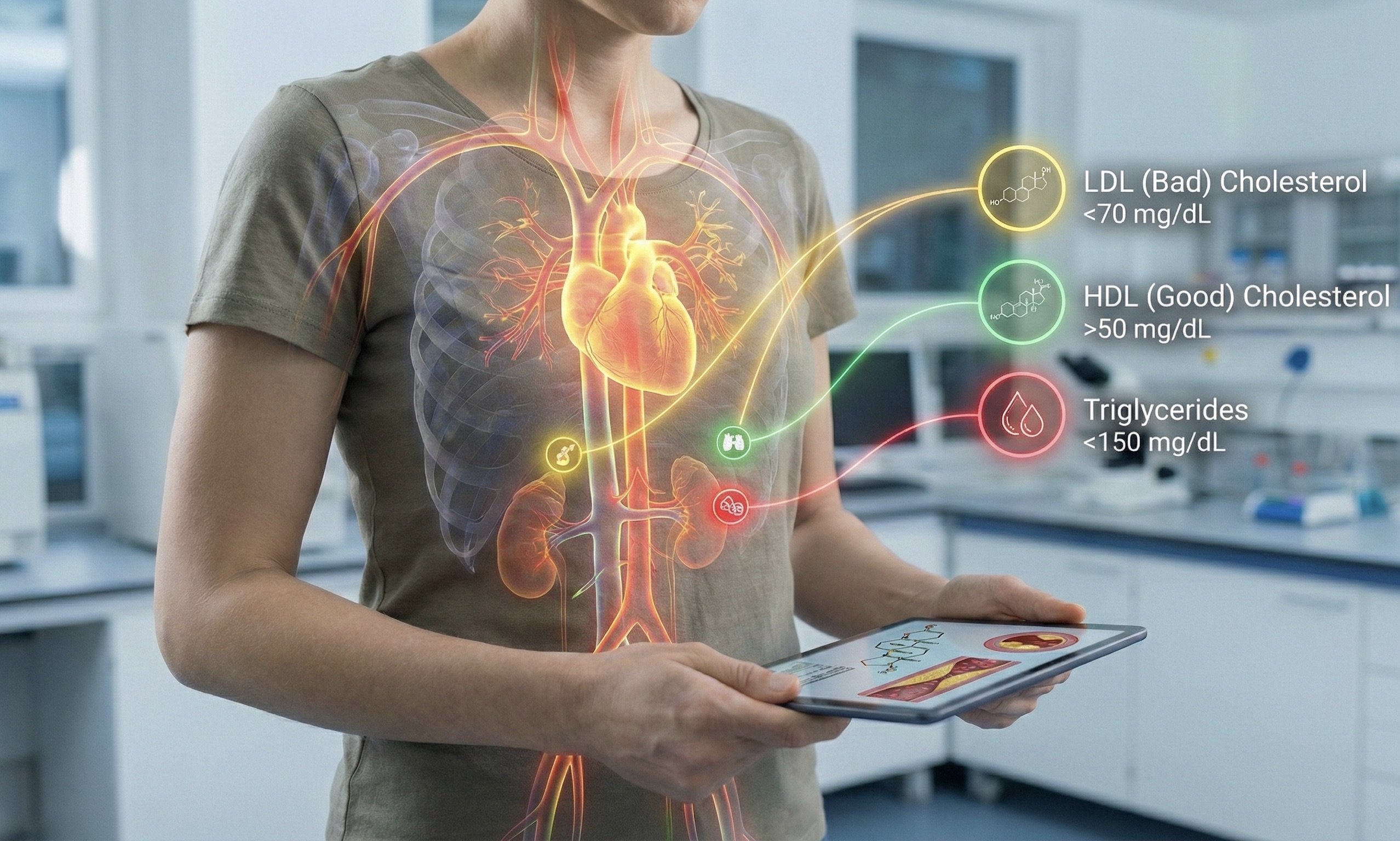
How Your Liver Controls Cholesterol
Your liver manages cholesterol through several key functions:
Cholesterol synthesis - The liver produces cholesterol using an enzyme called HMG-CoA reductase (the same enzyme that statin drugs block). This process is regulated by insulin and other metabolic signals.
VLDL production - The liver packages triglycerides and cholesterol into VLDL particles, which are released into the bloodstream. VLDL eventually becomes LDL cholesterol.
Cholesterol removal - The liver clears LDL from the blood through LDL receptors and converts cholesterol into bile acids for elimination.
When the liver is stressed or fatty, all three processes can malfunction.
Fatty Liver and Atherogenic Dyslipidemia
Research shows that NAFLD (fatty liver disease) causes a specific pattern of cholesterol problems known as atherogenic dyslipidemia:
- Elevated triglycerides (from increased VLDL secretion)
- Low HDL cholesterol
- Increased small, dense LDL particles (the most harmful type)
- Sometimes elevated total cholesterol
This pattern is particularly dangerous for cardiovascular health because small, dense LDL particles penetrate artery walls more easily than larger LDL particles.
The relationship is bidirectional. Fatty liver worsens lipid profiles, and abnormal lipids contribute to more fat accumulation in the liver. Breaking this cycle often requires addressing both issues.
Why Standard Cholesterol Tests Miss the Picture
A standard lipid panel measures total cholesterol, LDL, HDL, and triglycerides. These numbers are useful, but they don't tell you whether your liver is the source of the problem.
Consider two people with the same LDL of 140 mg/dL:
- Person A has normal liver enzymes. Their elevated LDL may be genetic or dietary.
- Person B has elevated ALT and GGT. Their LDL is likely driven by fatty liver and metabolic dysfunction.
The treatment approach for these two people is different. Person B may see their cholesterol improve significantly by addressing liver health, while Person A may need different interventions.
Key Markers to Test Together
Elevated triglycerides with low HDL and elevated liver enzymes is a classic pattern suggesting fatty liver as the driver of dyslipidemia.

What You Can Do
If your cholesterol is abnormal and your liver enzymes are elevated, focusing on liver health may improve both. Weight loss of just 5-10% can significantly reduce liver fat and improve lipid profiles. Reducing refined carbohydrates and alcohol also helps.
If your liver enzymes are normal but cholesterol is high, the cause is likely elsewhere, and different strategies may be needed.
Testing both systems helps you understand what's actually driving your numbers.
Want to check your liver health? Test your liver's health score in 5 minutes below.
.png)
.jpeg)


.jpeg)