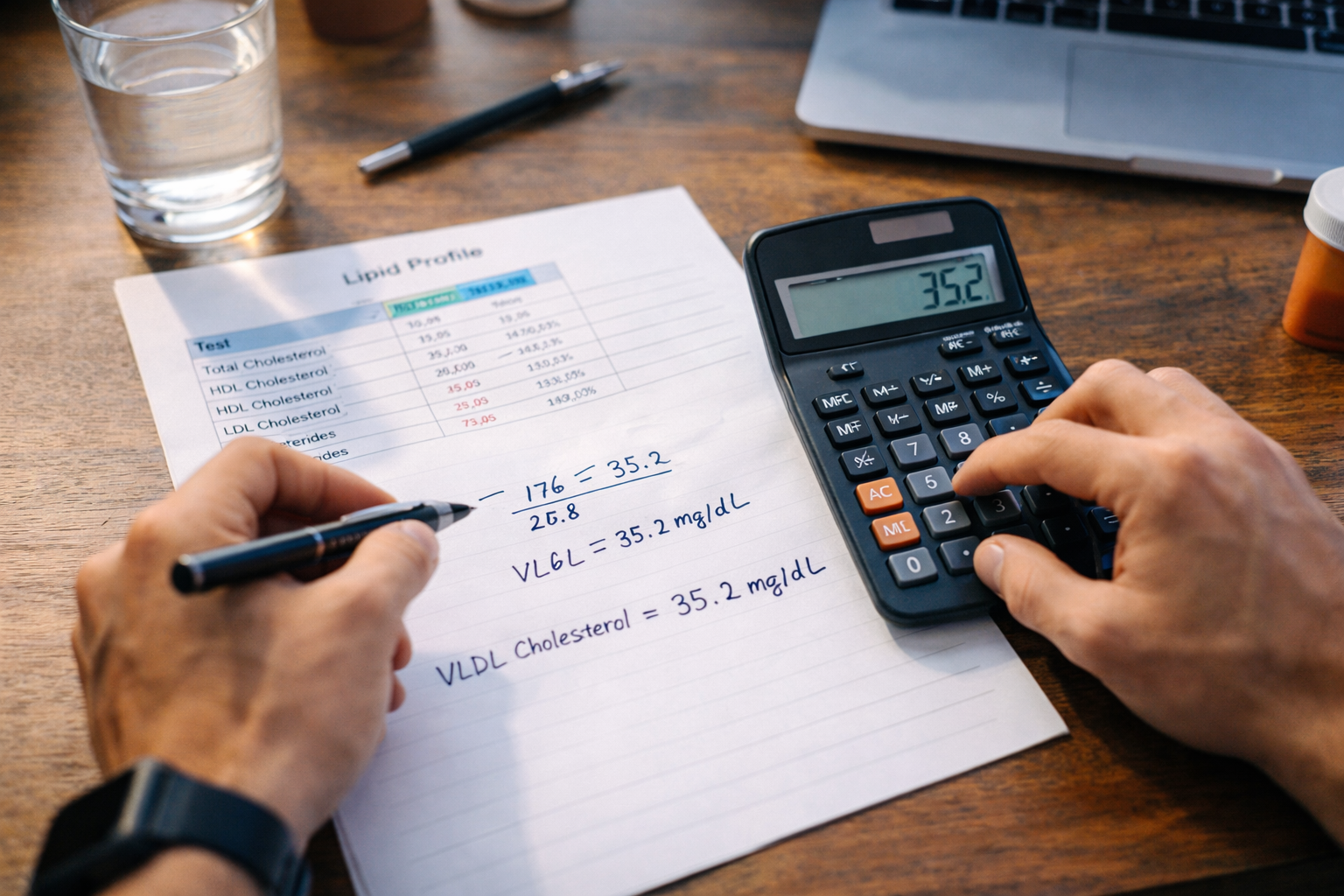


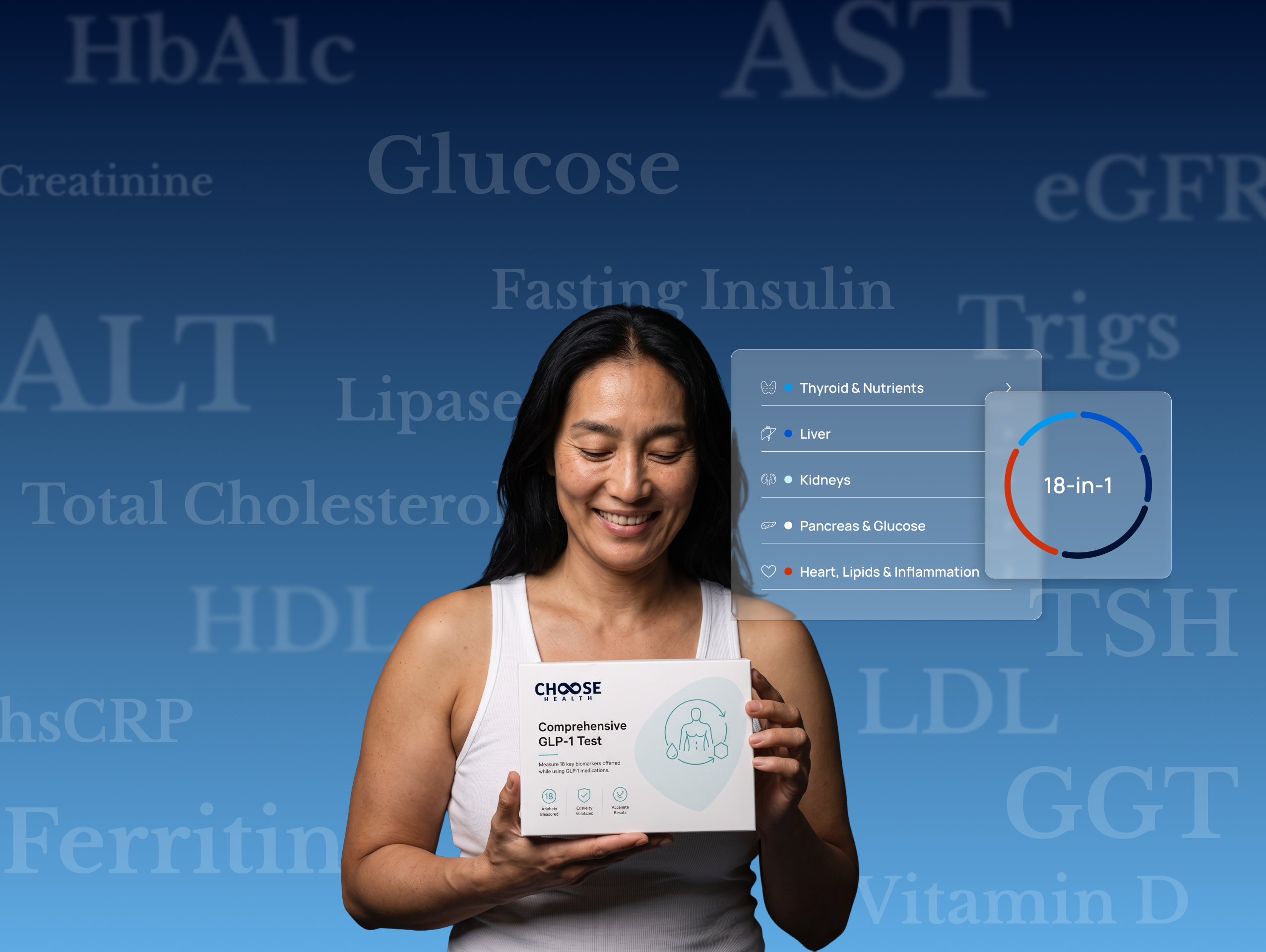
If you get a GLP-1 prescription online there's often no requirement for blood testing to establish baseline metrics, even though it's strongly recommended. And when testing is mentioned, providers often leave out some important markers.
On this page
- Why many online GLP-1 providers don't emphasize baseline testing
- Which biomarkers get left out, and why they matter
- What to do if you've already started without testing
Getting a GLP-1 prescription has never been easier. You fill out a questionnaire, message a clinician, and your first dose arrives at your door.
That convenience bypasses some steps that used to be standard for safety reasons. One of them is baseline bloodwork. If you started semaglutide or tirzepatide through an online provider and never had a blood test, you're not alone, and it isn't too late.
Many online providers don't require blood work
Lab requirements vary a lot by provider. Looking at a provider's intake process or FAQ section will tell you what's required, if anything.
A U.S. News review of online GLP-1 providers describes the same split. Some platforms require a video visit, medical history verification and lab testing before prescribing. Many don't require a video visit at all and rely on an online questionnaire and messaging.
Metabolic health experts describe it as a trade-off. Some telehealth providers start treatment without labs in low-risk individuals, particularly where access barriers exist. Baseline labs aren't strictly mandatory, but they are strongly advisable, because blood tests often catch issues that aren't causing symptoms yet.
None of this means telehealth is unsafe, or that your prescriber did something wrong. It means the safety net may be thinner than you assumed, and you can add that layer yourself.
Why baseline labs still matter if you've already started
It's a common assumption that if lab work wasn't done at the start, there's no point doing it now. That's worth pushing back on. Labs are still useful mid-treatment for two reasons.
They show where you are now
Many of these markers respond to weight loss, reduced food intake and dehydration. A current snapshot is worth having precisely because it will keep changing.
They give you a reference point
Every future test, at 6 months or 12, is easier to interpret once you have a starting line to compare it against.
.jpeg)
The biomarkers often missing
Here's what each one tells you, and why it gets overlooked even when a provider does bring up bloodwork.
Creatinine and eGFR
The Wegovy® label includes a warning for acute kidney injury due to volume depletion, and advises monitoring renal function, particularly in patients reporting adverse reactions that could lead to it. In trials, some kidney problems were associated with GI side effects or dehydration.
If you've had stretches of vomiting, diarrhea or barely drinking while adjusting your dose, your kidneys are worth checking. Creatinine and eGFR are the standard markers of how well they're filtering.
Fasting glucose, HbA1c and fasting insulin
Fasting glucose and HbA1c can reveal prediabetes or diabetes that hasn't been diagnosed. Without them, you don't know whether an elevated HbA1c changes your clinical category.
Fasting insulin is the one most likely to be missing. It captures insulin resistance, which can show up before glucose or A1c moves, and it's a useful way to track metabolic progress beyond the scale.
ALT, AST and GGT
Weight, insulin resistance and liver health are closely tied. ALT and AST are enzymes released when liver cells are stressed, and GGT adds another angle on liver and bile duct health.
Most telehealth intake forms never mention them, even though GLP-1 manufacturers suggest tracking them. A baseline lets you and a clinician see whether liver markers move in the right direction as you lose weight.
Lipase
Pancreatitis is listed in the Wegovy® label, which says the drug should be discontinued promptly if pancreatitis is suspected, and shouldn't be started if it's confirmed. Symptoms include severe stomach-area pain that won't go away, sometimes radiating to the back, with or without nausea and vomiting.
Lipid panel, ApoB and hsCRP
Triglycerides, HDL, LDL and total cholesterol are the familiar lipid panel. ApoB is less familiar but increasingly used. Each atherogenic particle carries one ApoB molecule, so it gives a direct particle count and can predict heart disease risk more sharply than LDL alone.
hsCRP measures general inflammation. Together these show whether your cardiovascular risk profile is improving alongside your weight, which weight alone doesn't tell you.
TSH
TSH is a first-pass marker of thyroid function, and thyroid conditions affect weight, energy and mood.
Vitamin D and ferritin
When appetite drops, nutrient intake usually drops with it. A 2026 narrative review covering roughly 480,000 adults found vitamin D deficiency was the most common abnormality, at 7.5% at 6 months and 13.6% at 12 months. GLP-1 users also showed ferritin levels 26 to 30% lower than a comparison group on another diabetes drug.
Other sources note these deficiencies are usually linked to eating less rather than impaired absorption from the medication itself.
Every marker on this list, in one test
The Comprehensive GLP-1 Test covers kidney, blood sugar, liver, pancreatic, cardiovascular, thyroid and nutrient markers from a finger-prick sample at home.
$185 GLP35 for $35 off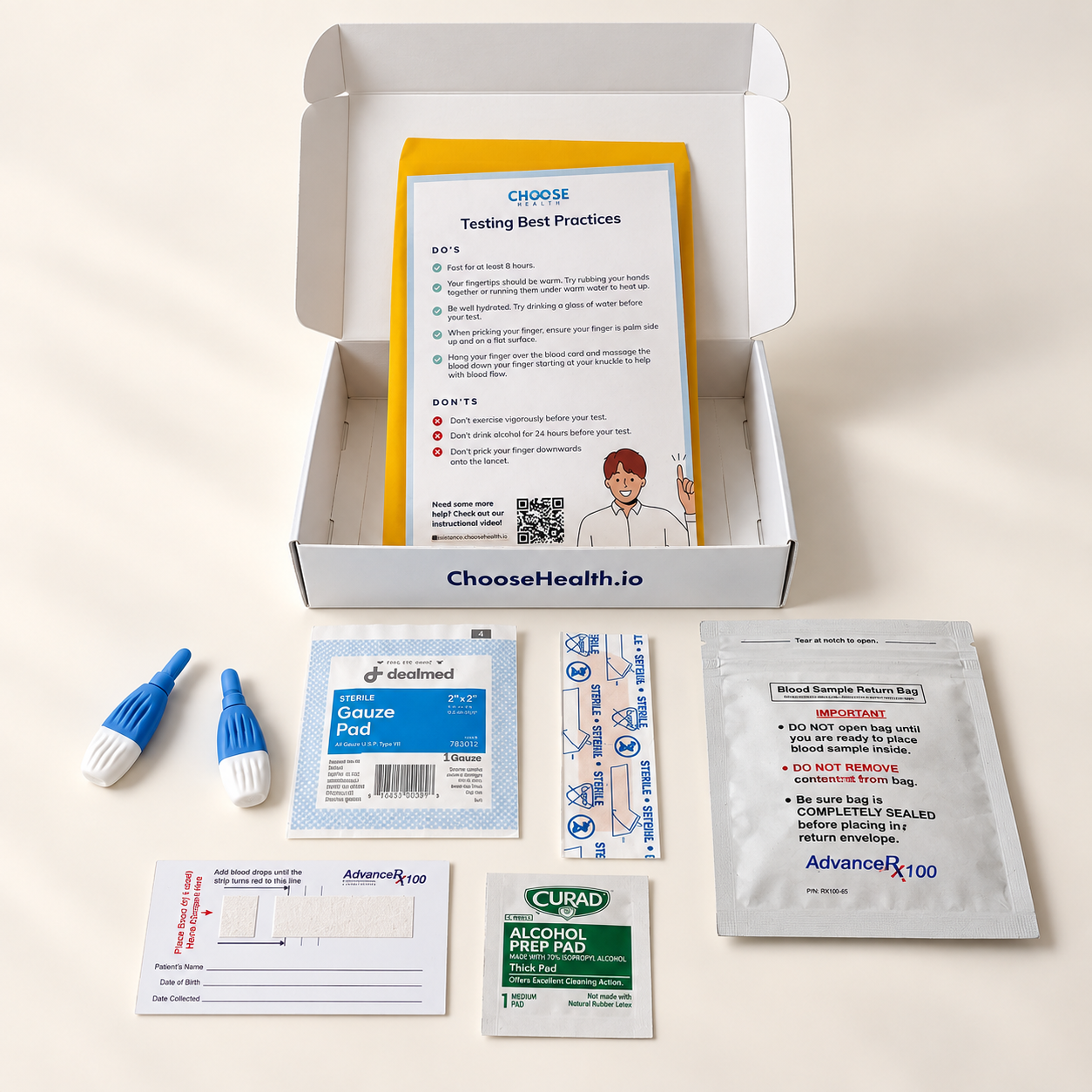
What to do if you haven't tested yet
Don't stop or change your medication on your own
Any decision about your dose belongs to your prescriber. Nothing on this page is a reason to alter treatment independently.
Get your baseline from home
You don't have to go back to a doctor to have blood work ordered. A finger-prick sample collected at home covers every marker above, with results through a HIPAA-compliant dashboard in days.
Share the results with your prescriber
This information is what directs your care. Any out-of-range value is worth sending to your clinician, who can decide whether follow-up testing is needed.
Retest on a schedule
Testing again around the 6-month mark shows how your numbers are moving. You may not need every biomarker at that point, but you should cover the ones in the Basic GLP-1 Test.
18 biomarkers · DBS finger-prick
Comprehensive GLP-1 Test
Every marker in this guide, measured from one sample you collect at home. Ships free, results in days, and you can speak with a telehealth practitioner about them.
- Kidney
- Creatinine, eGFR
- Blood sugar
- Fasting glucose, HbA1c, fasting insulin
- Liver and pancreas
- ALT, AST, GGT, lipase
- Cardiovascular, thyroid, nutrients
- Full lipid panel, ApoB, hsCRP, TSH, vitamin D, ferritin
GLP35 for $35 off · Basic GLP-1 Test $125 with GLP15 for $15 off
Get your baseline ↗At-home finger-prick collection. Physician-reviewed results.
It doesn't matter whether your GLP-1 prescription came from Choose Your Horizon, Hims, Ro, Noom, your local clinic or somewhere else. Testing these biomarkers is a safety net worth having with any GLP-1 medication. You can also browse all at-home test kits.
This article is for informational purposes and is not a substitute for medical advice, diagnosis or treatment. Do not start, stop or change a prescribed medication based on at-home test results. Share results with your prescribing clinician. Wegovy is a registered trademark of its respective owner and is not affiliated with Choose Health.
.png)