



.jpeg)
What You’ll Learn:
- The connection between diet and Metabolic Dysfunction-Associated Steatotic Liver Disease and what can be tested to gauge risk.
- Why physical activity is essential for liver function and which liver biomarkers indicate you need to get moving more.
- How alcohol can damage the liver and what to measure to find out if your drinking habits are problematic.
- The benefits of regular checkups and testing to catch liver problems early and measure improvements over time.
Fatty liver disease often develops silently alongside insulin resistance, obesity, elevated triglycerides, and poor metabolic health — long before symptoms appear. That’s why measuring biomarkers can provide valuable insight into how well your liver is functioning and whether lifestyle changes are working.
.jpeg)
We agree that healthy habits are essential for protecting the liver from preventable disease and improving liver function. But it’s also important to recognize that you can’t manage what you don’t measure. Without knowing the current condition of your liver and how it’s performing, it’s difficult to know what lifestyle changes will have the biggest impact.
Let’s take a look at the four solid habits that are recommended by international health organizations and how they relate to biomarkers that are used to measure liver function.
Healthy Liver Habit: Balanced Diet
Metabolic Dysfunction-Associated Steatotic Liver Disease (MASLD) is caused by eating an unhealthy diet that includes saturated fat, sugar and processed foods. Eating unhealthy foods like these can cause fat to accumulate in the liver. Another way that diet has a negative effect on the liver is inflammation.
The solution is pretty straight-forward. Replacing fatty, sugary processed foods with fruits, vegetables, whole grains and lean protein. It will protect your liver and make you all-around healthier.
Liver Biomarkers to Measure:
There are a number of biomarkers that can indicate if your diet is impacting liver function. The key biomarkers to measure are:
- Alanine Aminotransferase (ALT) - ALT is the gold standard for measuring fat in the liver and damage to liver cells.
- Aspartate Aminotransferase (AST) - High levels of AST indicate liver cell damage and liver disease.
- Gamma-glutamyl Transferase (GGT) - GGT is an indicator of fatty liver disease and fibrosis.
- (Bilirubin) - Combining GGT and bilirubin measurements can be used as a noninvasive way to gauge liver fibrosis from a poor diet.
- Albumin (ALB) - This is a protein biomarker that can be used to assess malnutrition, inflammation and liver function. Low levels suggest a person may have liver disease.
- Ferritin (FERR) - High levels of FERR can be an indicator of liver disease and inflammation.
Healthy Liver Habit: Physical Activity
Another way to prevent fat buildup in the liver is engaging in physical activity. Regular exercise and movement is highly beneficial for the entire body, which has additional indirect effects on the liver. For example, physical activity improves sleep, and deep sleep is when the liver cells repair and regenerate the most. In fact, peak detoxification in the liver happens between 10pm and 2am for most people.
Healthy Liver Habit: Reducing Alcohol
The liver is the body’s toxin clearance machine. Alcohol is a toxin that’s so harsh it causes alcoholic liver disease (ALD). It’s a 100% preventable condition that worsens over time with continued alcohol use. But in the early stages, the effects of alcoholic liver disease can be reversed - if you know there’s damage to reverse.
You might be thinking that it’s easy to gauge ALD risk simply based on how much you drink. The problem with that theory is that alcohol affects people differently. Plus, there could be unknown underlying conditions that make alcohol more damaging for the liver. What may seem like moderate alcohol use could actually be damaging your liver, especially if you drink regularly over a long period.
Liver Biomarkers to Measure: AST/ALT Ratio
Reducing alcohol consumption is an essential step for improving liver health, but it’s important to understand if damage has already been done. It can serve as motivation to reduce alcohol use and help you gain a better understanding of what a “healthy” amount of alcohol is for you.
AST/ALT ratio is the go-to metric for measuring liver damage from alcohol use. If the ratio is greater than 2:1 it’s an indicator of liver damage from alcohol. The damage can include hepatitis (inflammation) and cirrhosis (scarring).
Anyone who thinks that reducing alcohol consumption could be a challenge may want to consider medications that are FDA-approved for alcohol use. Naltrexone medication is often recommended because it helps to curb alcohol cravings by inhibiting opioid receptors that produce dopamine when alcohol is consumed. In other words, you won’t feel the euphoric buzz from alcohol, which tempers the positive association and makes people less motivated to drink.
Healthy Liver Habit: Routine Check-Ups
Because liver disease and damage can be corrected in the early stages, early detection is crucial. Once cirrhosis sets in the damage is permanent. World health organizations stress the need for regular checkups with a physician to determine how well your liver is functioning and track function over time. It’s particularly important for people with conditions like diabetes or obesity that are at higher risk.
.jpeg)
Liver Biomarkers to Measure: Full Liver Function Panel
In addition to visiting your primary care physician, you can also take at-home blood tests to get benchmark metrics and gauge the difference that lifestyle changes are making. It can also help you catch signs of liver damage early when it’s easier to correct.
In this case, a full liver function panel is ideal because it gives you the most complete picture of your liver health. You can test a number of biomarkers all at once to get information that helps you improve liver function, metabolic function and more.
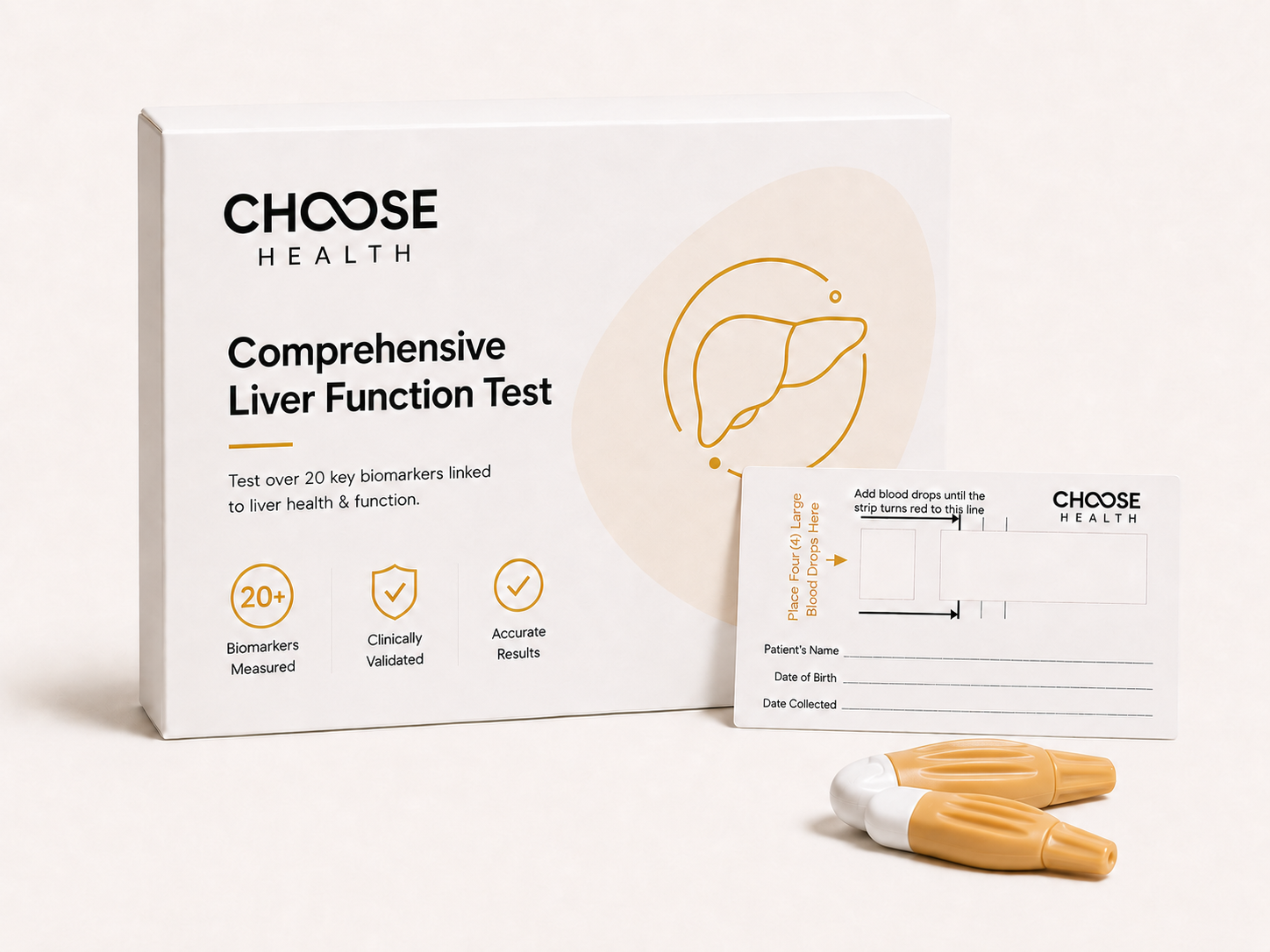
Choose Health offers one of the most advanced liver function at-home tests available today. Our Comprehensive Liver Function Test covers 20+ biomarkers, including all of the metrics noted above. It’s one of the easiest ways to measure liver health, make the necessary lifestyle changes and improve how your body functions.
.jpeg)


.jpeg)