




HSI is endorsed by the European Association for the Study of the Liver (EASL). It uses data from standard blood tests and medical records.
The formula was developed in 2010 using data from over 10,000 subjects. Accuracy is 81.2% for detecting fatty liver.
What you'll learn:
- How to calculate HSI
- What each input measures
- How to interpret your score
- HSI vs FLI: when to use which
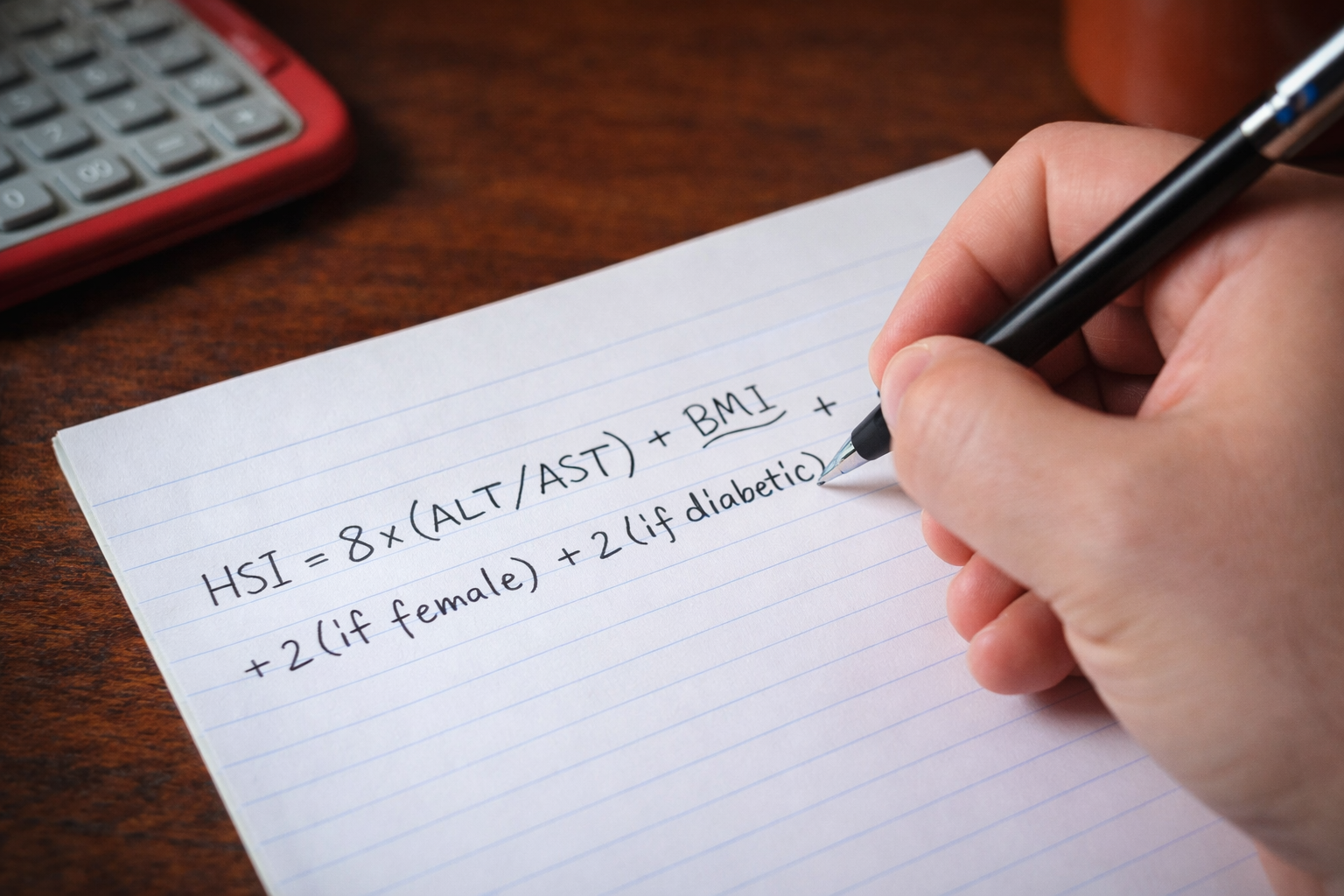
How to Calculate HSI
The Formula:
HSI = 8 × (ALT/AST) + BMI + 2 (if female) + 2 (if diabetic)
You need ALT and AST from a liver panel, plus your BMI. Add 2 points if female. Add 2 more if you have type 2 diabetes.
An HSI below 30 has a negative likelihood ratio of 0.186. Fatty liver is very unlikely.
An HSI above 36 has a positive likelihood ratio of 6.069. Fatty liver is highly probable.
In the original study, 85.6% of subjects with scores below 30 or above 36 were correctly classified.
Why These Inputs Matter
ALT/AST Ratio - In fatty liver, ALT typically rises more than AST. This shifts the ratio higher. Learn more about what ALT reveals and what AST indicates.
BMI - Higher body mass increases fatty liver risk. The formula weights BMI directly.
Female Sex (+2) - Women have different baseline enzyme patterns. The formula adjusts for this.
Type 2 Diabetes (+2) - Insulin resistance drives fat accumulation in the liver. Diabetics have higher NAFLD prevalence.
HSI vs FLI: Which Should You Use?
Both screen for fatty liver. They use different inputs.
If one is indeterminate, try the other. For more on liver testing, see our guide on liver function testing.
Fatty liver is often reversible. A 5-10% reduction in body weight can significantly improve your HSI score. Understanding fatty liver and life expectancy puts the importance of early action in perspective.

When to Retest
HSI is useful for monitoring, not just initial screening.
Retest after:
- 3-6 months of lifestyle changes
- 5%+ body weight loss
- Changes in diabetes management
- Starting or stopping medications that affect liver
Track ALT and AST regularly. These markers respond to dietary and lifestyle changes. At-home liver testing makes monitoring easier.
FAQ
Is the Hepatic Steatosis Index accurate?
81.2% accuracy. Sensitivity is 93.1% at scores below 30. Specificity is 92.4% at scores above 36.
Can I calculate HSI without blood tests?
No. You need ALT and AST from a blood test. BMI, sex, and diabetes status you already know.
Why do women get +2 points?
Women have different baseline enzyme patterns and hormonal factors affecting liver fat. The formula adjusts for this.
Does a high HSI mean liver damage?
Not necessarily. HSI detects fat accumulation, not inflammation or fibrosis. Additional testing determines progression.
Know Your Liver Numbers
The Hepatic Steatosis Index estimates fatty liver risk using routine blood tests. If you don't know your ALT and AST levels, testing is the first step.
Choose Health's Liver Test includes ALT, AST, and GGT. This gives you everything needed to calculate both HSI and FLI.
Explore our liver health quiz in under 5 minutes below, to obtain your liver's health score.
.png)
.jpeg)


.jpeg)